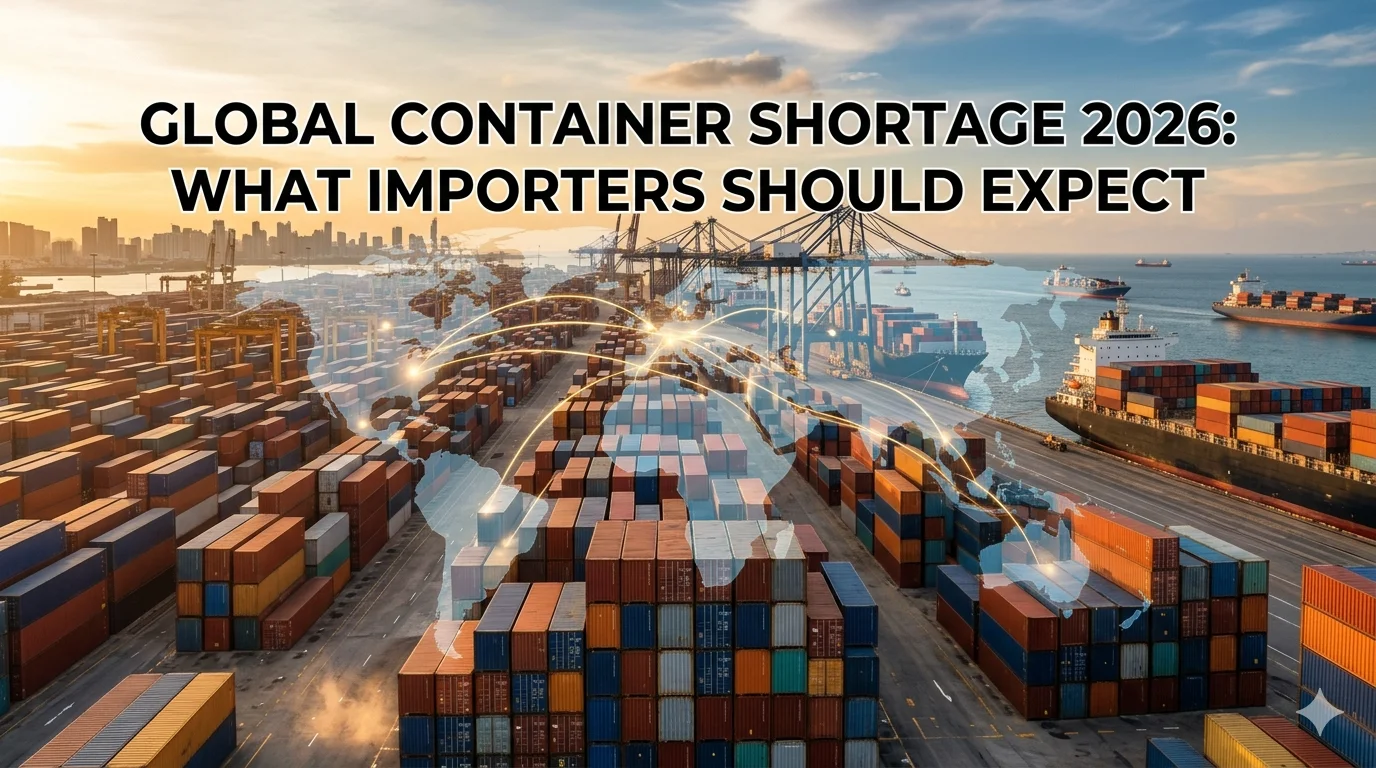
The global shipping industry continues to face significant disruptions in 2026 as container shortages affect supply chains worldwide. Importers are once again dealing with equipment imbalances, port congestion, rising freight rates, and longer transit times. For businesses relying on international trade, understanding the causes and impacts of the container shortage is essential for maintaining stable inventory levels and controlling logistics costs.
At Falcon Global Logistics, we closely monitor global freight trends to help importers navigate changing market conditions efficiently.
Why Is There a Global Container Shortage in 2026?
Several factors have contributed to the ongoing container shortage:
- Continued trade route disruptions in key shipping corridors.
- Port congestion across Asia, Europe, and North America.
- Container imbalances caused by shifting trade patterns.
- Increased demand from e-commerce and manufacturing sectors.
- Shipping delays linked to geopolitical tensions and route diversions.
The situation has been further complicated by the ongoing challenges discussed in our article about how the Red Sea crisis is affecting Pakistan importers in 2026.
Impact on Ocean Freight Rates
Whenever container availability tightens, freight rates typically rise. Carriers prioritize high-demand routes, leading to increased costs for importers and exporters.
Businesses should closely monitor freight pricing trends and secure bookings early. You can learn more in our detailed analysis of ocean freight rate trends for importers and exporters.
Which Regions Are Most Affected?
The container shortage is impacting several major trade lanes:
- China to Europe
- Asia to North America
- Middle East to Africa
- South Asia to Central Asia
- Far East to Pakistan trade routes
Route diversions through the Cape of Good Hope instead of the Suez Canal continue to increase transit times and equipment shortages. Learn more in our article about Suez Canal vs Cape Route shipping costs and impacts.
How Importers Can Reduce Risk
Companies can take proactive measures to minimize the impact of container shortages:
1. Book Shipments Earlier
Advance planning provides greater access to available equipment and competitive freight rates.
2. Diversify Transportation Modes
For urgent cargo, consider combining ocean freight with air freight services. Read our comparison of air cargo vs ocean freight to determine the best solution.
3. Optimize Inventory Management
Maintaining strategic inventory levels helps reduce supply chain disruptions. Explore our guide on warehousing and inventory management best practices for 2026.
4. Reduce Overall Supply Chain Costs
Smart logistics planning can offset rising freight expenses. Learn practical strategies in our article on reducing supply chain costs without sacrificing reliability.
Customs Clearance Becomes More Important
When container availability is limited, avoiding customs delays becomes even more critical. Efficient documentation and regulatory compliance can prevent additional demurrage and detention charges.
Importers should stay informed about changing regulations through our guide to Pakistan customs clearance regulations in 2026.
Sustainability and Container Utilization
Shipping lines are increasingly focused on maximizing container utilization while reducing emissions. Businesses adopting sustainable logistics strategies can benefit from improved operational efficiency and lower costs.
Read our insights on reducing carbon footprints in freight forwarding.
How Falcon Global Logistics Helps Importers
At Falcon Global Logistics, we help importers navigate container shortages through:
- Ocean Freight Solutions
- Air Freight Services
- Customs Clearing & Forwarding
- Import & Export Consultancy
- Flexible multimodal transportation options
- Real-time shipment tracking and logistics support
Our experience managing complex freight operations, including heavy lift and project cargo shipments, enables us to provide reliable logistics solutions even during periods of market volatility.
Looking Ahead: What to Expect in Late 2026
Industry experts anticipate that container availability will gradually improve as new equipment enters service and shipping networks adapt to evolving trade routes. However, importers should prepare for continued fluctuations in freight rates and transit times throughout 2026.
Businesses that embrace digital logistics solutions and resilient supply chain strategies will be best positioned to manage uncertainty. Read our article on the future of global logistics in 2026 for additional insights.
Conclusion
The global container shortage of 2026 remains one of the biggest challenges facing importers and exporters. Early planning, flexible transportation strategies, effective customs management, and strong logistics partnerships are essential for maintaining supply chain resilience.
If your business requires reliable freight forwarding, customs clearance, or international shipping support, contact Falcon Global Logistics today. Our team is ready to help you navigate changing market conditions with confidence.