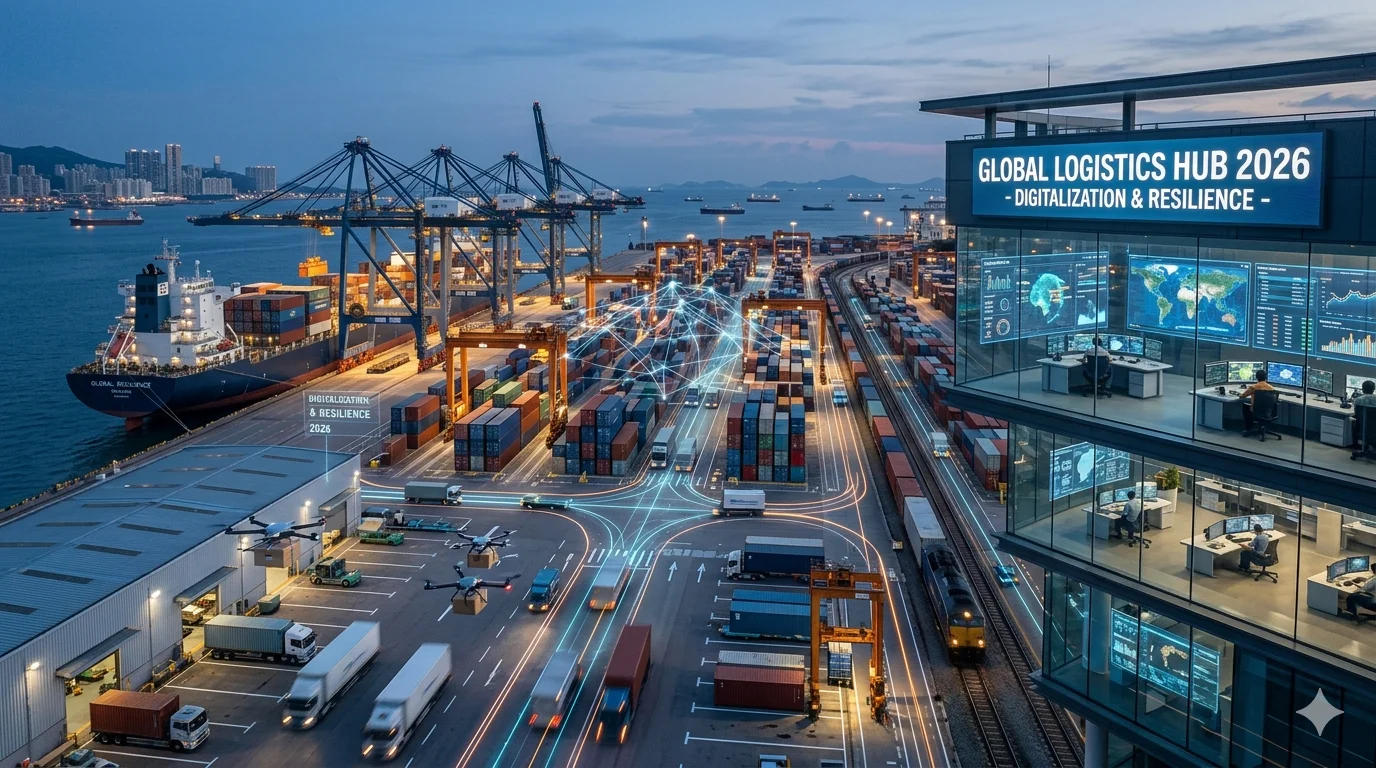
The logistics industry is undergoing its most profound transformation in decades. As global trade volumes recover and diversify, freight forwarders, shippers, and supply chain managers face a new dual mandate: embrace digitalization while building resilient, disruption-proof operations. In 2026, these two imperatives are no longer separate strategies — they are one. At Falcon Global Logistics, we are at the forefront of this shift, helping businesses across Pakistan and beyond future-proof their supply chains.
Why Digitalization Is No Longer Optional in Global Logistics
The pandemic-era disruptions, Red Sea shipping crisis, and post-COVID demand volatility have permanently changed the logistics landscape. Companies that relied on manual processes, fragmented data, and reactive decision-making were the hardest hit. Today, digital logistics solutions — from AI-powered freight platforms to cloud-based customs management — are not competitive advantages; they are baseline requirements for survival and growth.
According to industry data, logistics companies that invested in digital transformation reduced operational costs by up to 30% and improved on-time delivery rates by 25% compared to their non-digital counterparts. In 2026, the gap between digital leaders and laggards is wider than ever.
1. AI & Predictive Analytics: The New Logistics Intelligence Layer
Artificial Intelligence is reshaping every corner of the freight industry. From predictive ETAs and demand forecasting to dynamic route optimization and risk scoring, AI enables logistics providers to make smarter, faster decisions at scale. Carriers and forwarders are now deploying machine learning models that analyze thousands of variables — weather patterns, port congestion, geopolitical risk, fuel prices — to recommend optimal routing and carrier selection in real time.
For importers and exporters in Pakistan, this means access to more reliable transit time estimates, proactive alerts on shipment delays, and data-driven rate benchmarking. At Falcon Global Logistics, our integrated AI tracking dashboard gives clients a 360° view of their cargo — whether it's moving via ocean freight from Karachi, air freight from Lahore, or multimodal routes through the UAE.
2. Blockchain & Smart Contracts: Building Trust Across the Supply Chain
One of the greatest pain points in international logistics is document fraud, disputes over cargo conditions, and payment delays. Blockchain technology addresses all three by creating an immutable, shared ledger of every transaction, handoff, and document in the supply chain. In 2026, major shipping consortiums and port authorities — including those in Singapore, Rotterdam, and Jeddah — have implemented blockchain-based bill of lading systems, reducing document processing time from days to hours.
Smart contracts automate payment releases upon delivery confirmation, eliminating disputes and improving cash flow for exporters. For Pakistani textile and agricultural exporters operating on tight margins, faster payment cycles enabled by blockchain can be transformative. Falcon Global Logistics actively supports clients in navigating blockchain-enabled trade finance solutions and digitized documentation workflows.
3. Supply Chain Resilience: Lessons Learned, Strategies Applied
The most forward-thinking logistics strategies in 2026 are built around resilience by design. This means diversifying supplier bases, holding strategic buffer stocks, and developing multi-route contingency plans. The days of single-source, single-route supply chains optimized purely for cost are over. Today's winners optimize for cost-resilience balance.
Key resilience strategies gaining traction include:
- Multi-carrier strategies: Working with 2–3 carrier alliances to avoid over-dependence on one shipping line or alliance.
- Port diversification: Routing cargo through alternative gateways (e.g., Port Qasim + Gwadar for Pakistan-origin shipments) to mitigate congestion risks.
- Nearshoring & friendshoring: Sourcing from geographically closer or politically aligned partners to reduce lead times and geopolitical exposure.
- Inventory buffering: Leveraging bonded warehouse solutions to hold critical stock closer to end markets.
Falcon Global Logistics offers comprehensive supply chain risk assessments, helping clients identify vulnerabilities and design resilient logistics networks tailored to their specific trade lanes and cargo profiles.
4. The Rise of Logistics-as-a-Service (LaaS)
The subscription-economy model has arrived in logistics. Logistics-as-a-Service (LaaS) platforms allow businesses to access freight capacity, warehousing, last-mile delivery, and customs brokerage on-demand — without building owned infrastructure. This is particularly impactful for SMEs and e-commerce businesses in Pakistan that need enterprise-grade logistics capabilities without the capital expenditure.
LaaS providers — including specialized freight tech startups and established forwarders like Falcon Global Logistics — offer API-integrated booking, real-time tracking, automated documentation, and digital invoicing through a single unified platform. This means a Karachi-based fashion exporter can book LCL consolidation to Europe, track the shipment live, manage customs paperwork, and reconcile freight costs — all from one dashboard.
5. Sustainable Logistics: Green is Now a Compliance Requirement
Environmental sustainability is no longer a CSR checkbox — it is a regulatory and commercial imperative. The International Maritime Organization's (IMO) tightening Carbon Intensity Indicator (CII) ratings are forcing carriers to retrofit vessels, adopt slow steaming, and invest in alternative fuels like green methanol and ammonia. The EU Carbon Border Adjustment Mechanism (CBAM) is adding a new layer of carbon accountability for exporters shipping into Europe.
For shippers, this has direct cost implications. Carriers with poor CII ratings face surcharges or capacity restrictions — costs that are increasingly passed down the supply chain. Choosing logistics partners who proactively manage their carbon footprint is now a strategic business decision, not just an ethical one.
At Falcon Global Logistics, we work with a curated network of eco-certified carriers and offer carbon footprint reporting for client shipments. Our optimized route planning reduces unnecessary transhipments, lowering both emissions and transit times simultaneously.
Customs & Compliance in the Digital Era
Pakistan Customs' WeBOC (Web Based One Customs) system continues to evolve with new risk-based assessment modules and digital document submission capabilities. Internationally, the WCO's SAFE Framework and Authorized Economic Operator (AEO) programs reward compliant traders with expedited clearances and reduced examination rates. In 2026, traders who have not yet adopted electronic data interchange (EDI) and digital invoicing face measurable delays and cost penalties.
Falcon Global Logistics' customs clearance team is fully equipped to handle WeBOC filings, AEO advisory, duty drawback claims, and cross-border compliance across all major trade corridors — ensuring your cargo moves without unnecessary hold-ups at any port of entry or exit.
What This Means for Pakistani Importers & Exporters
Pakistan's trade sector is at a pivotal moment. With CPEC-linked infrastructure investments maturing, the Gwadar Port gaining strategic relevance, and a growing base of tech-savvy SME exporters, Pakistani businesses have a real opportunity to compete on global supply chain efficiency — but only if they partner with logistics providers who are truly digitally capable and globally connected.
The future belongs to businesses that treat logistics not as a cost center, but as a strategic differentiator. Digital visibility, resilient routing, sustainable practices, and compliant customs management are the pillars of that differentiation in 2026 and beyond.
At Falcon Global Logistics, we bring 15+ years of freight forwarding expertise together with cutting-edge digital tools to deliver what our clients need most: reliability, transparency, and performance — every shipment, every time.