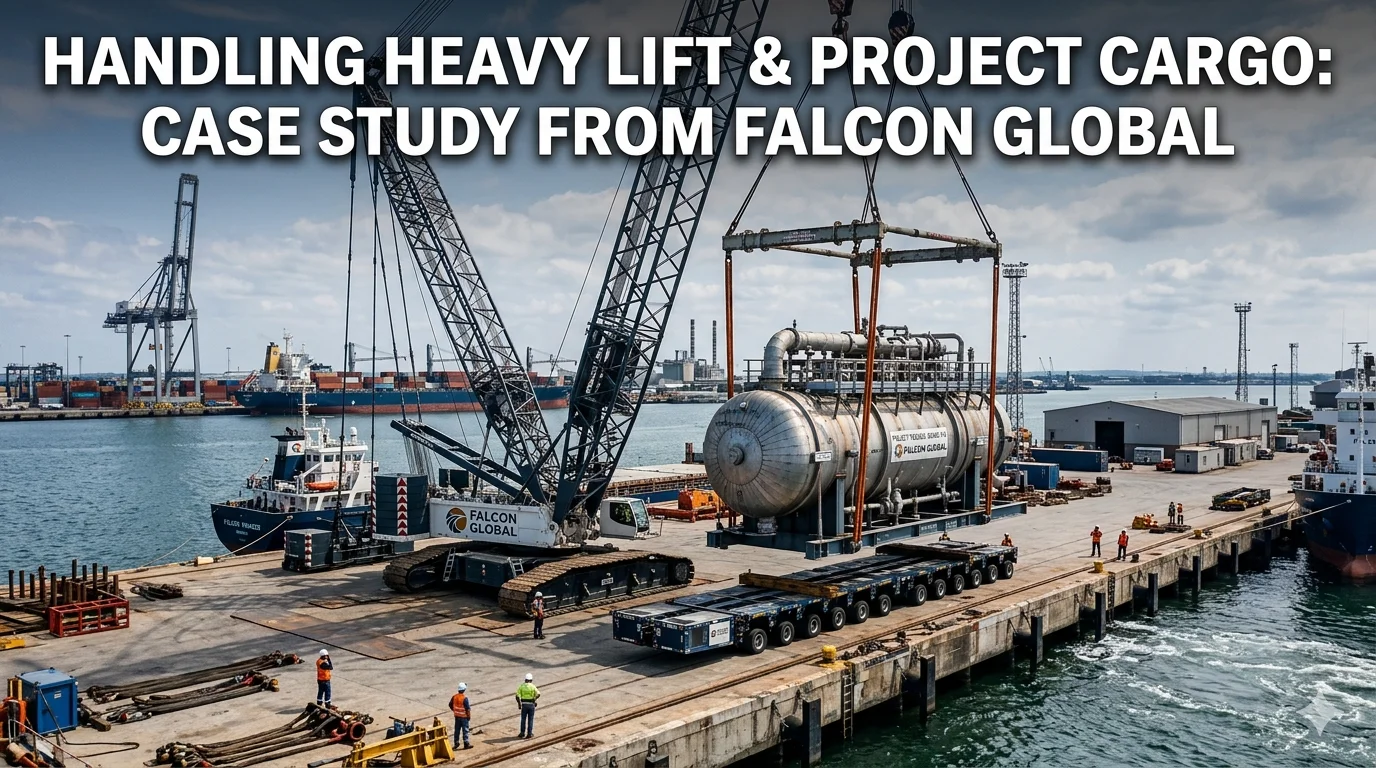
Heavy-lift and project cargo moves need a plan built around the actual cargo, route and handling points. A generic container quote is not enough for equipment that exceeds standard dimensions or weight limits. Before requesting rates, assemble a cargo pack and ask each party to confirm what it can handle and what remains subject to survey or approval.
1. Build a Complete Cargo Pack
Share accurate, final dimensions and gross weights for every piece, including projections, lifting points and the center of gravity when known. Include drawings, photographs, packaging details, stackability, value, delivery location and the required delivery window. Identify whether the cargo can be separated, tilted or handled only in a particular orientation. If dimensions are estimates, label them as estimates and confirm them before equipment is booked.
2. Check the Entire Route
Ask for route checks at each handoff: factory or warehouse access, inland road restrictions, bridges and overhead clearances, port gates, quay and crane capacity, vessel stowage, discharge equipment and final delivery access. A route that works for the vessel may still fail at the first or last mile. Confirm who arranges site surveys, permits, escorts, temporary road works and local approvals, and who pays if a survey changes the plan.
3. Match Equipment to the Cargo
| Possible option | What to confirm |
|---|---|
| Flat rack or open-top container | Dimensions, payload, securing points, out-of-gauge limits and carrier acceptance. |
| Breakbulk or heavy-lift vessel | Lift capacity, lifting plan, cargo access, stowage, weather limitations and port handling arrangements. |
| Specialized inland transport | Axle loads, turning radius, road permissions, bridge capacity, escorts and unloading equipment at destination. |
These are planning categories, not a recommendation for a particular shipment. The carrier, port, equipment provider and local transport operator must confirm feasibility for the final cargo dimensions and route.
4. Assign Responsibilities in Writing
Project moves involve shippers, surveyors, transport companies, terminals, carriers, customs brokers and consignees. Put the handoffs in a responsibility matrix: who supplies each document, who approves the lifting and lashing plan, who secures permits, who books handling equipment, who monitors milestones and who can authorize a change. Record the escalation contact for each stage.
For customs and export documentation, confirm the commodity description, tariff classification, declared value, origin, permits and supporting technical papers with the responsible broker and relevant authority. Requirements depend on the commodity and the origin, transit and destination jurisdictions; do not rely on a general article as a ruling for a specific shipment.
5. Price the Whole Move and the Main Risks
Compare quotations on the same scope. Check whether they include surveys, lifting and lashing, special equipment, port handling, inland haulage, permits, escorts, storage, demurrage, insurance and destination charges. Ask which items are estimates, what could trigger a surcharge, how long the quote remains valid and how delays or changes are priced.
Discuss contingencies before cargo is dispatched: missed vessel cutoff, unavailable crane or trailer, route restriction, customs examination, adverse weather, damaged packaging and a change in delivery window. Agree how the cargo will be protected and where it can safely wait if the planned transfer cannot proceed.
Pre-Booking Checklist
- Final piece-by-piece dimensions, weights, drawings and handling instructions are available.
- Origin, port, vessel, destination and final-site access have been checked by the responsible operators.
- Equipment, lifting points, lashing and load distribution have been reviewed for the actual cargo.
- Permits, customs documents, insurance and terminal requirements have an assigned owner.
- The quotation states inclusions, exclusions, assumptions, validity and change costs.
- Milestones, escalation contacts and contingency arrangements are documented.
Falcon Global Logistics provides ocean freight and clearing and forwarding services. For an initial discussion, share the cargo pack, route, handling constraints and target dates so the scope can be assessed with the relevant operators.