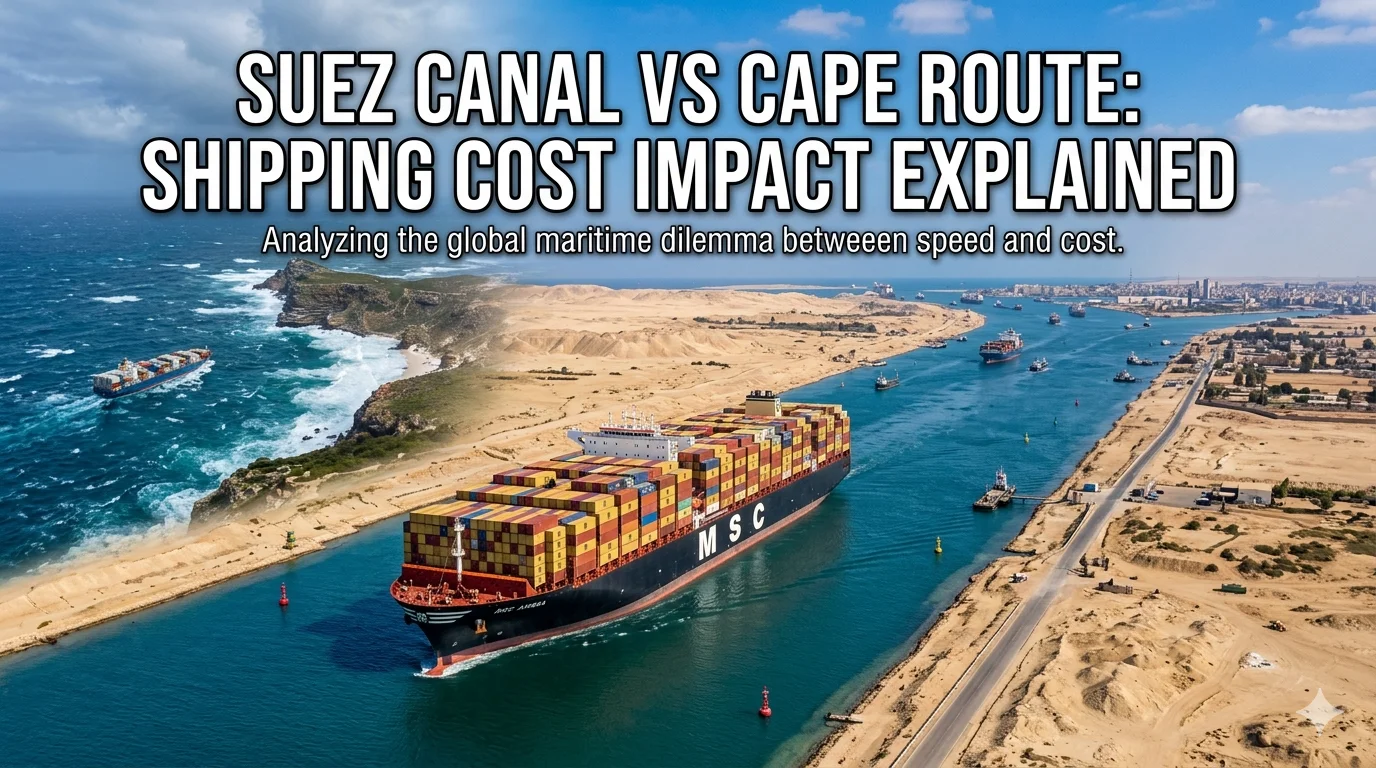
The ongoing disruptions in the Red Sea region have forced many shipping lines to reconsider their traditional routes between Asia and Europe. As a result, the debate between the Suez Canal route and the Cape of Good Hope route has become one of the most important topics in global logistics. For importers, exporters, and freight forwarders, understanding the shipping cost impact of these routes is essential for effective supply chain planning.
At Falcon Global Logistics, we continuously monitor global trade developments to help our clients make informed shipping decisions. In this article, we explain how both routes affect freight rates, transit times, fuel consumption, inventory costs, and overall supply chain efficiency.
Understanding the Two Major Shipping Routes
The Suez Canal is the shortest maritime connection between Asia and Europe. Under normal circumstances, vessels transit through the canal and the Red Sea, significantly reducing travel distance and fuel consumption.
The Cape Route, on the other hand, requires vessels to sail around the southern tip of Africa via the Cape of Good Hope. While it avoids geopolitical risks in the Red Sea, it adds thousands of nautical miles to the journey.
To better understand how current global events affect these routes, read our detailed analysis: How the Red Sea Crisis Is Affecting Pakistan Importers in 2026.
Transit Time Comparison
One of the biggest differences between the two routes is transit time.
- Suez Canal Route: Typically 25–35 days between Asia and Europe.
- Cape Route: Usually adds 10–15 additional days depending on origin and destination ports.
Longer transit times create inventory challenges and can impact manufacturing schedules, retail stock availability, and customer satisfaction.
Fuel Costs and Operational Expenses
Fuel remains one of the largest operating expenses in ocean freight. Since the Cape Route requires vessels to travel significantly farther, carriers consume more fuel and incur higher operational costs.
Key cost factors include:
- Additional bunker fuel consumption.
- Higher crew and vessel operating expenses.
- Increased insurance premiums.
- Potential equipment repositioning costs.
- Longer container cycle times.
These factors often result in elevated freight rates for shippers. For additional insights, explore: Ocean Freight Rate Trends: What Importers and Exporters Need to Know.
Impact on Freight Rates
When carriers reroute vessels around Africa, shipping capacity effectively decreases because ships spend more time completing each voyage. Reduced capacity combined with strong cargo demand frequently leads to higher ocean freight rates.
Businesses shipping from Pakistan, China, India, and Southeast Asia to Europe may experience:
- General Rate Increases (GRIs).
- Peak season surcharges.
- Emergency operational surcharges.
- Equipment shortages.
- Extended booking lead times.
Supply Chain Risk Assessment
Although the Suez Canal remains the fastest route, geopolitical tensions can increase operational risks. The Cape Route offers greater route security but at a substantially higher transportation cost.
Businesses must balance:
- Speed versus reliability.
- Cost versus security.
- Inventory levels versus transit times.
- Customer expectations versus logistics expenses.
Companies seeking resilient logistics strategies should also review: The Future of Global Logistics: Digitalization and Resilience in 2026.
Environmental Impact
The longer Cape Route increases fuel consumption and carbon emissions. As sustainability becomes a priority for global shippers, many organizations are evaluating environmental performance alongside transportation costs.
Learn how businesses can improve sustainability through: Reducing Carbon Footprint in Freight Forwarding.
Alternatives for Time-Sensitive Cargo
For urgent shipments, some businesses are shifting critical cargo to air freight despite higher transportation costs. Air cargo provides significantly faster transit times and can help avoid costly production delays.
Compare transportation options in our guide: Air Cargo vs Ocean Freight: Speed vs Cost Analysis 2026.
How Importers Can Reduce Cost Impact
To mitigate rising transportation expenses, businesses should consider:
- Planning shipments further in advance.
- Optimizing container utilization.
- Using LCL and consolidation services where appropriate.
- Diversifying suppliers and sourcing regions.
- Leveraging warehousing solutions for inventory management.
Additional resources:
- How to Reduce Supply Chain Costs Without Sacrificing Reliability
- Warehousing & Inventory Management Best Practices for 2026
How Falcon Global Logistics Can Help
Whether your cargo moves through the Suez Canal or around the Cape of Good Hope, Falcon Global Logistics provides customized freight solutions designed to minimize cost, reduce risk, and improve supply chain performance.
Our services include:
- Sea Freight Solutions
- Air Freight Services
- Customs Clearance & Forwarding
- Import & Export Consultancy
- Heavy Lift & Project Cargo Expertise
Conclusion
The choice between the Suez Canal and the Cape Route has significant implications for shipping costs, transit times, inventory management, and overall supply chain efficiency. While the Suez Canal remains the preferred route due to its speed and lower operating costs, ongoing geopolitical challenges may continue to drive carriers toward the Cape Route.
Businesses that proactively adapt their logistics strategies, optimize inventory planning, and work with experienced freight forwarding partners will be better positioned to navigate these market disruptions successfully.
Need expert guidance for your next shipment? Contact Falcon Global Logistics today for customized freight solutions and competitive shipping rates.