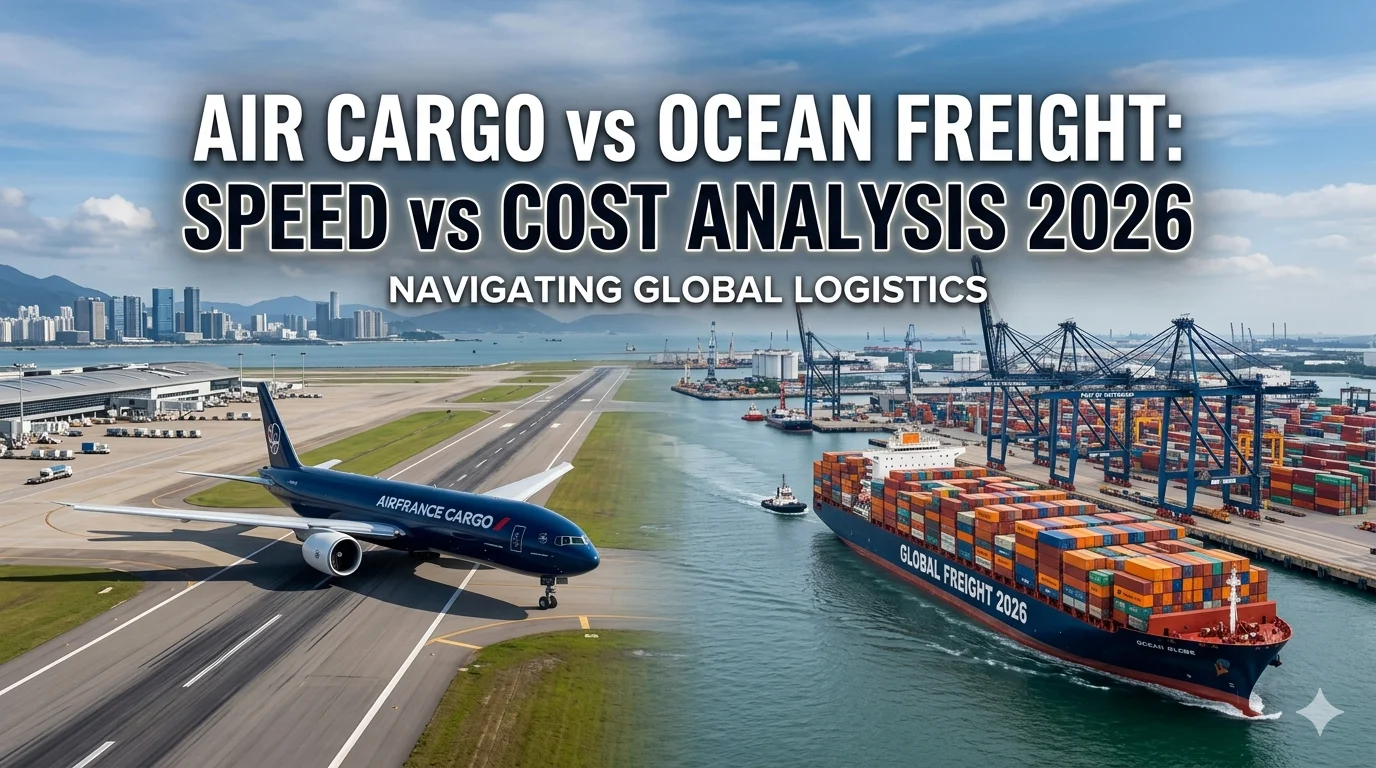
Choosing between air cargo and ocean freight is one of the most consequential decisions any importer or exporter makes. In 2026, with fluctuating fuel surcharges, evolving trade regulations, and growing pressure on supply chain efficiency, the choice is more nuanced than ever. At Falcon Global Logistics, we help businesses make data-driven shipping decisions that balance speed, cost, and reliability — and this in-depth guide breaks it all down for you.
Why the Air Cargo vs Ocean Freight Debate Matters More in 2026
Global supply chains have been stress-tested in recent years. From Red Sea route disruptions to post-pandemic demand surges, shippers have learned that a one-size-fits-all approach to freight mode selection is a liability. The decision between air freight and sea freight now involves more variables than ever before: carbon regulations, digital customs platforms, port congestion, and shifting consumer expectations. Understanding the trade-offs in 2026 is essential for any business that competes internationally.
For a broader look at how the entire logistics sector is evolving, read our guide on The Future of Global Logistics: Digitalization and Resilience in 2026.
1. Speed: Air Cargo Wins — But at a Premium
When it comes to transit time, air freight is unmatched. Shipments from Karachi to major European or North American hubs typically take 2 to 5 business days by air, compared to 18 to 35 days via ocean freight on the same corridors. For perishables, pharmaceuticals, high-value electronics, or time-sensitive e-commerce orders, air cargo is often the only commercially viable option.
In 2026, airlines have continued to expand dedicated cargo capacity on key trade lanes — particularly between South Asia, the Middle East, and Europe. This expansion has introduced slightly more competitive air freight pricing compared to pandemic-era peaks, though air cargo remains significantly more expensive per kilogram than ocean shipping. Our air freight division operates across Pakistan's major cargo airports including Karachi, Lahore, and Islamabad, connecting your shipments to global markets in days.
2. Cost: Ocean Freight Dominates for Bulk Shipments
If cost efficiency is your primary objective and your cargo is non-perishable with flexible lead times, ocean freight is almost always the more economical choice. Shipping a full container load (FCL) by sea costs a fraction of equivalent air cargo rates — often 4 to 6 times cheaper per unit weight, depending on the commodity and trade lane.
In 2026, ocean freight rates on major lanes have stabilized after years of extreme volatility, though Suez Canal bypass routing via the Cape of Good Hope has added transit days on some Europe-bound corridors. For Pakistan-based exporters moving textiles, machinery, rice, or construction materials, ocean freight via Karachi Port and Port Qasim remains the backbone of international trade. Explore our sea freight services for competitive FCL and LCL rates to destinations worldwide.
For a comprehensive breakdown of current rate dynamics, read our detailed analysis: Ocean Freight Rate Trends: What Importers and Exporters Need to Know.
3. Head-to-Head Comparison: Air Cargo vs Ocean Freight
| Factor | ✈️ Air Cargo | 🚢 Ocean Freight |
|---|---|---|
| Transit Time | 2–5 business days | 18–35 days |
| Cost per kg | High (4–6× vs ocean) | Low to moderate |
| Ideal Cargo Size | Small to medium volumes | Large bulk volumes (FCL/LCL) |
| Schedule Reliability | Very high | Good (port congestion risk) |
| Carbon Footprint | High per tonne-km | Lower per tonne-km |
| Best For | Pharma, electronics, e-commerce, perishables | Textiles, machinery, raw materials, FMCG |
| Hazardous Goods | Limited acceptance | Wider acceptance |
| Customs Complexity | Moderate | Moderate to high |
4. When to Choose Air Freight
Air cargo is the right choice when your shipment meets one or more of the following criteria:
- Time-sensitive goods: Perishables, pharmaceuticals, seasonal fashion, or products with hard delivery deadlines that cannot absorb ocean transit times.
- High-value, low-weight cargo: When the shipment's commercial value justifies the freight premium — such as electronics, precision instruments, jewelry, or critical spare parts.
- Emergency restocking: When a stockout situation threatens a production line or retail shelf replenishment that cannot wait weeks for ocean transit.
- Small or lightweight shipments: Where the economics of ocean LCL consolidation do not apply due to very low cargo weight or volume.
- E-commerce cross-border fulfillment: Consumer expectations for fast delivery make air the preferred mode for direct-to-consumer international shipments.
Falcon Global Logistics offers temperature-controlled, charter, and express air freight services from all major Pakistani airports. Contact our team for a tailored air freight solution.
5. When to Choose Ocean Freight
Sea freight is the preferred mode when your shipping requirements align with the following:
- High volume and weight: Full Container Load (FCL) shipments of raw materials, textiles, or industrial goods deliver the best cost-per-unit economics by a wide margin.
- Flexible lead times: Businesses with well-planned inventory cycles can absorb longer transit and save significantly on freight costs per shipment.
- Hazardous or oversized cargo: Certain goods that cannot be transported by air due to regulatory restrictions, dangerous goods classifications, or physical dimensions must travel by sea.
- Sustainability is a priority: Ocean shipping generates significantly less CO₂ per tonne-km compared to air cargo — a critical factor for businesses with ESG commitments or corporate carbon reduction targets.
- LCL consolidations for smaller exporters: Less-than-container load options allow smaller volumes to move cost-effectively without paying for a full container.
Our sea freight solutions include FCL, LCL, and multimodal options — optimized for both cost and route efficiency from Pakistan to destinations across Asia, Europe, Africa, and the Americas.
6. The Hybrid Strategy: Combining Air and Ocean Freight
Many businesses in 2026 are adopting a sea-air hybrid freight strategy — using ocean freight for core inventory replenishment cycles and air cargo for fast-response top-ups, promotional launches, or emergency stock recovery. This blended approach optimizes landed cost while preserving supply chain agility.
For example, a fashion retailer might ship its bulk seasonal collection by sea from Karachi to Europe, while using air freight to rush a limited edition drop that responds to real-time trend data. Falcon Global Logistics specializes in designing multimodal solutions that seamlessly combine ocean and air freight into a cost-optimized, resilient supply chain strategy — customized for your business and cargo profile.
7. Air Freight Resilience: E-Commerce and Pharma Lead Growth
While ocean freight handles bulk volume, air cargo continues to grow driven by two dominant sectors. E-commerce cross-border volume surged by 18% year-on-year globally in 2026, as consumers expect faster international deliveries. Simultaneously, pharmaceutical cold-chain logistics demand has reached new highs, driven by vaccine distribution, biologics trade, and clinical trial material shipments across global research networks.
Our air freight division provides temperature-controlled solutions, GDP-compliant cold chain handling, and charter services for urgent shipments — connecting Pakistan's pharmaceutical and high-value export sectors to global buyers without compromise on quality or timeline compliance.
8. Customs & Compliance: Critical for Both Modes
Regardless of freight mode, efficient customs clearance is what separates a smooth shipment from a costly delay. In 2026, both air and sea cargo channels in Pakistan operate through advanced digital platforms — WeBOC (Web Based One Customs) for ocean imports and exports, and IATA e-freight standards for air cargo documentation. Our clearing & forwarding team manages all documentation, duty assessment, HS code classification, and regulatory compliance for both freight modes — ensuring your cargo clears on first presentation, without demurrage or detention surprises.
9. Import/Export Solutions Built Around Your Cargo
Whether you are an importer sourcing goods from China, Europe, or the UAE, or an exporter shipping Pakistani textiles, surgical instruments, sporting goods, or agricultural products to global markets, Falcon Global Logistics delivers end-to-end import/export services engineered around your specific cargo profile and business objectives.
Our freight consultants analyze every shipment across key parameters — weight, volume, commodity value, destination, regulatory requirements, and lead-time constraints — and recommend the most cost-effective and reliable freight mode at each booking stage. No guesswork. No generic advice.
Conclusion: The Right Mode — With the Right Partner
The air cargo vs ocean freight decision has no universal answer. The correct choice for every shipment depends on your cargo type, volume, commercial value, delivery timeline, budget, sustainability commitments, and the regulatory context of your trade lane. What remains constant is the value of working with a freight partner who understands your business deeply enough to guide that decision correctly — every single time.
At Falcon Global Logistics, we bring 15+ years of freight forwarding expertise, carrier relationships across leading airlines and ocean shipping lines, and a commitment to cost transparency and reliable execution. Whether you need express air cargo or cost-efficient ocean consolidations — or a strategic combination of both — we deliver.
Ready to optimize your freight strategy for 2026? Contact us today for a free consultation and a customized freight quote.