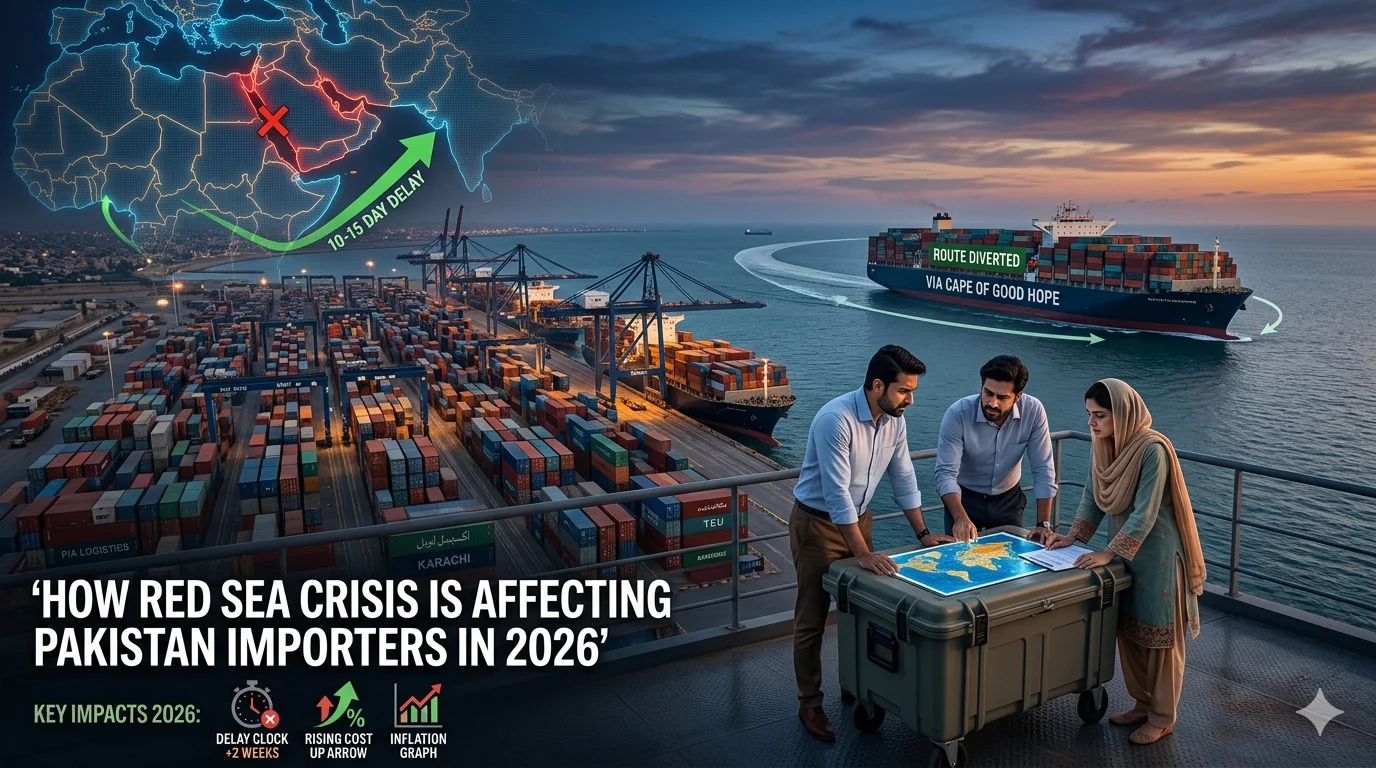
The ongoing Red Sea crisis continues to disrupt global shipping routes in 2026, creating major challenges for Pakistan importers and exporters. Rising freight costs, vessel diversions, shipment delays, and insurance surcharges are directly impacting businesses that rely on international trade.
For importers in Pakistan, the effects are being felt across industries including textiles, electronics, machinery, pharmaceuticals, and consumer goods. Companies are now searching for faster, safer, and more reliable logistics solutions to maintain supply chain stability.
At Falcon Global Logistics, we closely monitor global trade disruptions and help businesses adapt through flexible freight forwarding, customs clearance, and supply chain optimization strategies.
Why the Red Sea Route Is Important for Pakistan Trade
The Red Sea and Suez Canal corridor is one of the world’s busiest maritime trade routes, connecting Asia to Europe and other international markets. A large percentage of Pakistan’s imports and exports travel through this region.
Due to security concerns and attacks on commercial vessels, many global shipping lines are rerouting ships around the Cape of Good Hope. This alternative route significantly increases transit time and fuel consumption.
Businesses involved in sea freight services are facing severe scheduling disruptions, container shortages, and unpredictable delivery timelines.
1. Freight Rates Have Increased Dramatically
One of the biggest consequences of the Red Sea crisis is the sharp increase in ocean freight rates. Shipping companies are charging additional emergency risk surcharges and war risk insurance fees.
Pakistan importers who depend on cargo from China, Europe, and the Middle East are now paying significantly higher shipping costs compared to previous years.
Businesses looking to control logistics expenses should also explore strategies discussed in our guide: How to Reduce Supply Chain Costs Without Sacrificing Reliability .
2. Longer Transit Times Are Delaying Cargo
Ships avoiding the Red Sea are now taking longer routes around Africa, adding up to 10–20 extra days to transit schedules. This has created serious supply chain delays for Pakistan importers.
Delayed shipments are affecting inventory planning, manufacturing schedules, and retail operations. Importers dealing with seasonal products or urgent shipments are under additional pressure.
Companies requiring urgent delivery are increasingly shifting toward air freight services despite higher transportation costs.
You can also compare shipping options in our detailed article: Air Cargo vs Ocean Freight: Speed vs Cost Analysis 2026 .
3. Importers Are Facing Inventory & Warehousing Challenges
Supply chain uncertainty has forced many Pakistan businesses to maintain higher inventory levels to avoid stock shortages. This has increased demand for warehousing and inventory management solutions.
Efficient storage and forecasting are becoming critical for businesses that depend on imported goods. Companies are also diversifying suppliers to reduce dependency on a single trade route.
Learn more in our article: Warehousing & Inventory Management Best Practices for 2026 .
4. Customs & Clearance Delays Are Increasing
Congestion at international ports is creating additional customs processing delays. Pakistan importers are experiencing difficulties with documentation, container availability, and clearance scheduling.
Working with experienced clearing & forwarding experts is now more important than ever.
Businesses should stay updated with changing compliance procedures through our guide: Customs Clearance 2026: New Regulations for Pakistan Importers .
5. Shift Toward Supply Chain Digitalization
The Red Sea crisis has accelerated digital transformation in logistics. Businesses now rely heavily on real-time shipment tracking, AI-powered ETA systems, and predictive analytics to manage disruptions.
Logistics companies using modern technologies can provide better visibility and faster response times during global crises.
Read more about the future of logistics here: The Future of Global Logistics: Digitalization and Resilience in 2026 .
How Falcon Global Logistics Helps Pakistan Importers
At Falcon Global Logistics, we help businesses navigate uncertain global trade conditions through reliable freight forwarding and customized logistics solutions.
- ✔ Competitive ocean freight solutions
- ✔ Air cargo alternatives for urgent shipments
- ✔ Customs clearance & documentation support
- ✔ Real-time shipment tracking
- ✔ Flexible import/export logistics planning
- ✔ End-to-end supply chain consultation
Whether you are importing machinery, industrial equipment, textiles, electronics, or retail products, our logistics experts help minimize delays and optimize transportation costs.
Explore our import & export services or contact our team directly for customized freight solutions.
Final Thoughts
The Red Sea crisis has become one of the most significant logistics disruptions affecting global trade in 2026. Pakistan importers must prepare for higher shipping costs, longer transit times, and ongoing supply chain uncertainty.
Businesses that invest in flexible logistics planning, digital visibility tools, and strong freight forwarding partnerships will be better positioned to manage these challenges successfully.
Stay updated with the latest logistics insights by visiting our blog section.