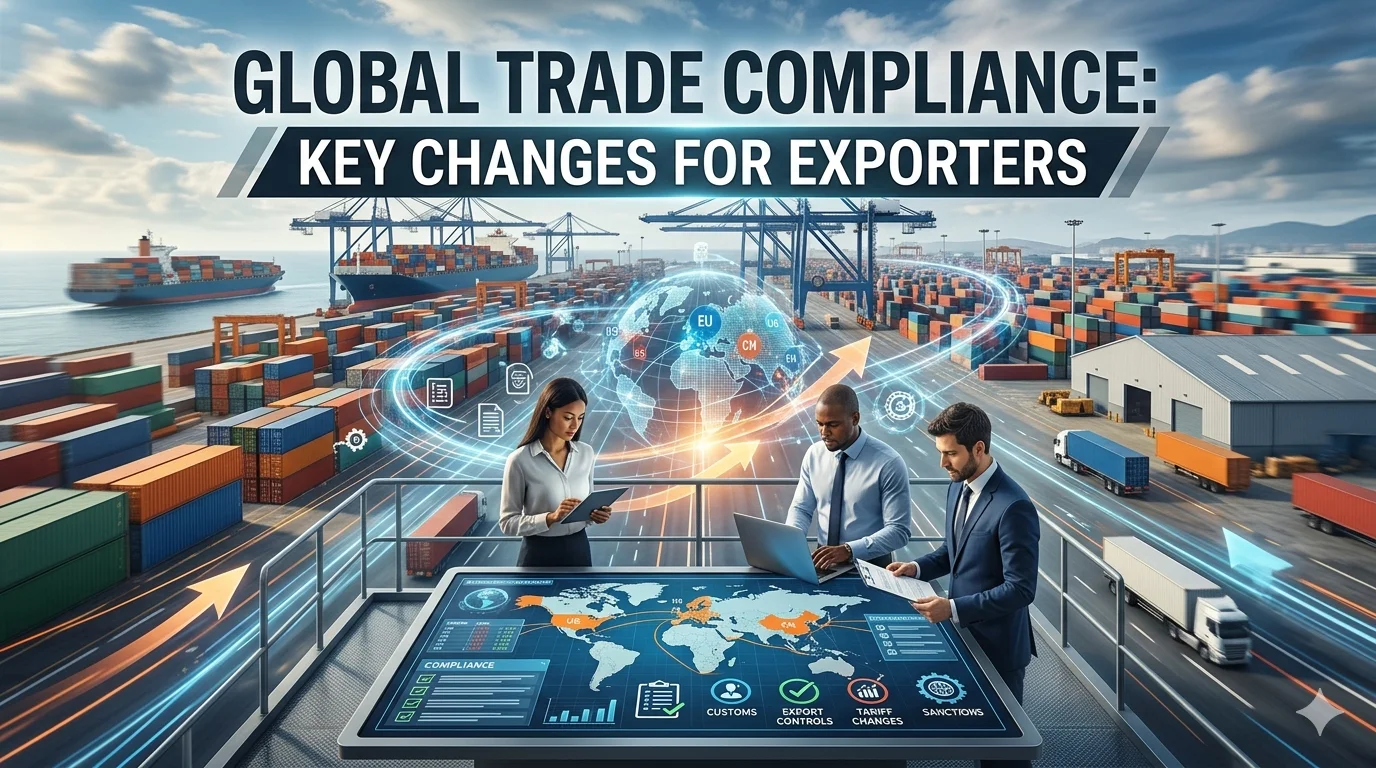
Global trade compliance is no longer just about avoiding penalties—it's a strategic advantage. As we move through 2026, exporters face a wave of regulatory updates, from new carbon border adjustments to enhanced forced labor due diligence. At Falcon Global Logistics, we help exporters navigate these shifts seamlessly. In this guide, we break down the most critical compliance changes that will impact your cross-border shipments this year.
1. EU Carbon Border Adjustment Mechanism (CBAM) Enters Full Enforcement
Starting January 2026, the EU's CBAM requires importers of cement, iron, steel, aluminum, fertilizers, and electricity to purchase carbon certificates reflecting the embedded emissions of their goods. For exporters outside the EU, this means you must provide verified emission data to your buyers. Non-compliance could lead to rejected shipments or financial penalties. Partnering with an experienced freight forwarder like Falcon's import-export team ensures accurate documentation and smoother EU market access.
2. Forced Labor Prevention – Expanded Due Diligence
The U.S. Uyghur Forced Labor Prevention Act (UFLPA) has been broadened, and similar laws are now active in Canada and the UK. Exporters must maintain full supply chain traceability for any goods entering these markets. Customs authorities are increasingly using AI risk assessment to target high-risk sectors. Our clearing & forwarding specialists help you implement compliant origin declarations and maintain audit-ready records.
3. Export Controls on Emerging Technologies
The Wassenaar Arrangement and national regimes (e.g., U.S. EAR, EU Dual-Use Regulation) now cover additional categories: advanced semiconductors, AI software, quantum computing components, and certain biotech equipment. Exporters of these items must secure licenses even for temporary exports or technology transfers. Stay informed by reading our related post on The Future of Global Logistics: Digitalization and Resilience in 2026 for tech-focused shipping strategies.
4. Customs Valuation & Transfer Pricing Scrutiny
Customs authorities in major economies (including China, India, and Germany) are intensifying reviews of related-party transactions. If you export to a subsidiary or distributor, you must be able to justify declared values against the transaction value method. Inconsistent transfer pricing can trigger costly audits and delays. For a deeper understanding of cost implications, check our analysis on Ocean Freight Rate Trends: What Importers and Exporters Need to Know.
5. Digital Documentation Mandates Accelerate
Paperless customs is no longer optional. The WTO Trade Facilitation Agreement's digital deadlines have pushed over 80 countries to require electronic export declarations, e-AWB for air freight, and blockchain-based bills of lading for ocean shipments. Exporters failing to submit via EDI portals face clearance delays of 5+ days. Explore how to balance speed and cost in our guide: Air Cargo vs Ocean Freight: Speed vs Cost Analysis 2026.
Additionally, the rise of single-window systems means that trade compliance data must be consistent across shipping, logistics, and financial documents. Falcon's integrated platform ensures your sea freight and air freight documentation aligns with customs requirements.
6. Sanctions & Export Restrictions – Real-Time Screening Required
The frequency of sanctions updates (Russia, Iran, North Korea, Belarus, and new designations for Myanmar) has made manual screening obsolete. Exporters must adopt automated denied-party screening integrated with their order management systems. Even indirect transshipment through third countries can trigger violations. Learn how to reduce such risks without inflating costs: How to Reduce Supply Chain Costs Without Sacrificing Reliability.
✓ Implement real-time denied-party screening software
✓ Update your internal controls for CBAM emission reporting
✓ Secure importer-of-record agreements for EU shipments
✓ Digitize all export records (minimum 5-year retention)
✓ Conduct forced labor risk audits on Tier 1 & Tier 2 suppliers
For Pakistan-based exporters, local updates to WeBOC and the SRO 450/2026 now require additional declarations for textile and leather goods exported to the EU and US. Our team at Falcon ensures you stay compliant with Customs Clearance 2026: New Regulations for Pakistan Importers (recently updated for exporters too).
Partner with Falcon for Proactive Compliance
Navigating these changes alone is risky. Falcon Global Logistics combines regulatory expertise with operational excellence. Whether you need help with a complex heavy lift project cargo, want to reduce your carbon footprint, or optimize your warehousing and inventory management, we have you covered.
Ready to future-proof your export operations? Contact Falcon Global Logistics for a compliance audit and tailored freight solutions. Also explore more insights on our blog, review our Privacy Policy and Terms of Service for transparency.