
Red Sea route returns are back in the shipping news, but a route announcement does not mean every carrier, service or sailing is using the Suez Canal. For Pakistan exporters booking cargo to Europe, the useful question is narrower: what route is confirmed for the exact vessel and booking, and what changes if the plan changes?
Quick answer: As of October 26, 2026, carriers are making selective Red Sea and Suez moves, while security and schedule risks remain. Check the named service, direction, vessel, port rotation and written booking confirmation before comparing transit time or price. Keep a workable Cape of Good Hope alternative for time-sensitive cargo.
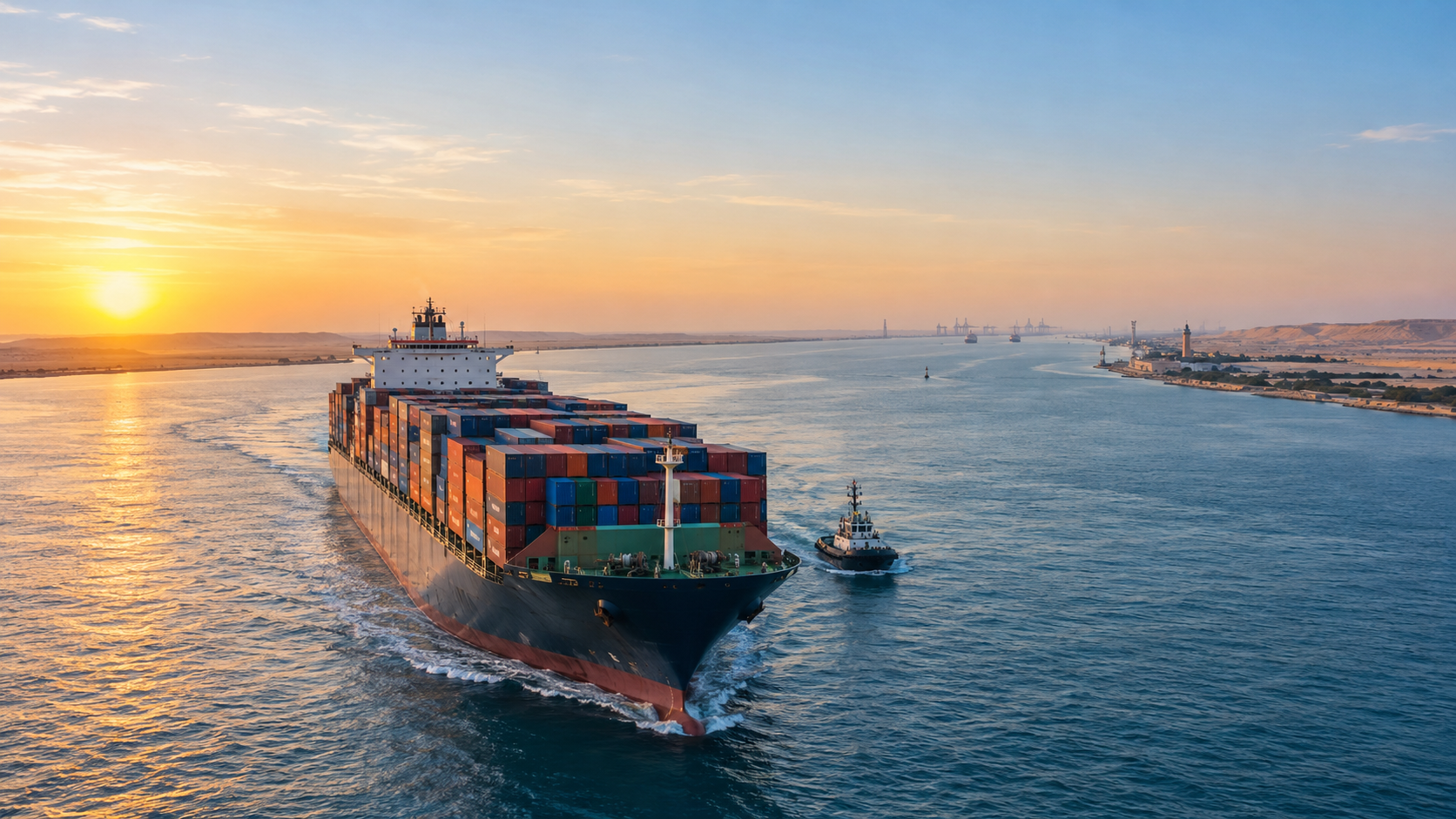
Illustrative AI-generated image. It does not depict a verified carrier, vessel or current sailing.
What the Red Sea route return means in October 2026
Freightos’ October market outlook, updated October 20, reported that container alliances and MSC planned to send some vessels through the Red Sea by the end of the month. The same outlook flagged heightened security risk and said renewed attacks could reverse progress. Treat this as a dated market outlook, not confirmation that a particular Pakistan–Europe booking will use Suez.
Carrier notices show why the distinction matters. In its September 14 advisory, MSC said it was partially restoring Suez transits on a limited number of services. For its Indusa service, it specified a westbound sailing from Colombo on September 23; eastbound cargo would continue via the Cape of Good Hope. MSC also said the transition would be handled case by case and that contingency arrangements could change individual voyages.
Xeneta’s Red Sea recovery report describes the return as uneven: it reports weekly deployed capacity crossing Bab el-Mandeb at 23% of pre-crisis levels, despite a 108% year-on-year increase. Those are market-wide capacity measures, not a promise of space, a Pakistan lane transit time or a forecast of your freight rate.
Red Sea or Cape route: compare the booked sailing
The Suez route can shorten a voyage on some Asia–Europe services compared with sailing around the Cape, but the actual difference depends on the carrier’s rotation, port calls, vessel schedule and operational conditions. Do not convert a map-distance difference into a guaranteed delivery date.
| Booking detail | What to ask the carrier or forwarder |
|---|---|
| Named service and vessel | Which service string and vessel are confirmed for this booking? |
| Route and direction | Is this sailing planned via Suez or the Cape, and does that apply to this direction of travel? |
| Port rotation | What are the transshipment ports and planned arrival port? Is any Colombo or other hub connection involved? |
| Transit estimate | What is the current port-to-port estimate, when does it begin, and what events could change it? |
| Price and surcharges | Does the written quote include all applicable ocean, fuel, security, terminal and documentation charges? |
| Contingency | If the vessel is rerouted, rolled or delayed, what notice, alternatives, cost and revised ETA will apply? |
Pakistan exporter booking checklist
- Get the route in writing. Ask the carrier or forwarder to identify the service, vessel or voyage, planned routing, direction and transshipment ports. A general statement that a carrier has “returned to the Red Sea” is not booking-specific evidence.
- Compare like with like. Request options for the same cargo-ready date, Karachi-area origin, European destination, container type, commodity and delivery terms. Compare the full quote and estimated arrival, not just the headline ocean rate.
- Check shipment-specific acceptance. Confirm cargo dimensions, weight, dangerous-goods status, temperature needs and equipment availability against that service. A route operating on a schedule does not guarantee it accepts every cargo type.
- Protect the delivery plan. Tell your buyer which ETA is an estimate, agree what buffer is needed for production or onward delivery, and identify a decision date for using the alternative sailing.
- Keep records current. Save the quote, booking confirmation, schedule notice and any route-change communication. Recheck the carrier’s advisory and shipment tracking before cargo handover and before making commitments based on an arrival date.
Will Red Sea returns lower Pakistan–Europe freight rates?
Not automatically. A shorter route can release vessel capacity over time, but prices also respond to demand, available ships, port congestion, fuel and carrier capacity decisions. The October outlook discussed both a gradual Red Sea return and continuing rate pressures. Obtain a dated quote for your own shipment and compare current carrier offers; market commentary is not a rate guarantee.
For background, see our Red Sea and Suez status update, our Suez versus Cape route comparison, and our sea freight services. For shipment-specific customs coordination, review clearing and forwarding.
Frequently asked questions
Have all container carriers returned to the Suez Canal?
No. The October 2026 reports describe selective or planned returns, while carrier advisories remain service- and direction-specific. Check the live booking and vessel schedule for your shipment. A carrier’s use of the Red Sea on one service does not establish that every sailing, route or direction has changed.
Can a Pakistan exporter assume a Suez sailing will be faster?
No. A Suez routing may be shorter than a Cape routing on some services, but a specific shipment’s delivery depends on the vessel schedule, port rotation, transshipment, cut-offs and operational changes. Ask for the current port-to-port estimate and confirm how the carrier will notify you if the planned route changes.
Should I delay a booking until more ships return?
There is no single answer for every shipment. Compare currently bookable services, cargo-ready dates, written ETAs and total charges. If delivery is time-sensitive, decide with your buyer whether a confirmed option with a contingency is preferable to waiting for a route change that may not apply to your service.
How the Red Sea situation developed in 2026
This page now also covers two earlier Falcon Global Logistics updates: our May 2026 look at how the Red Sea crisis affected Pakistan importers, and our September status check on whether the route was reopening. The short history:
- Early 2026: with attacks on commercial ships in the Red Sea, most carriers diverted Asia–Europe services around the Cape of Good Hope. For Pakistan importers and exporters, that meant longer transit times, higher fuel and insurance costs, tighter equipment availability and less reliable schedules.
- September 2026: attack intensity had fallen and some carriers began limited trial transits through the Suez Canal. MSC, for example, announced a direction-specific resumption of its Indusa service on September 14. Insurers still treated the corridor as high-risk, and Suez remained an option rather than the default.
- October 2026: carriers made further selective returns, as covered above, while warning that renewed attacks could reverse them.
The lesson from the year is the same as the checklist above: plan for routing that can change at short notice. Confirm the route for each booking, and keep a Cape alternative for time-sensitive cargo. For how the two routes compare on cost, see our explainer on Suez Canal vs Cape route shipping costs.
Sources and reporting notes
- UN Trade and Development: Review of Maritime Transport 2025: background on rerouting and capacity.
- Freightos Global Freight Outlook, October 2026 (updated October 20): market outlook on selective Red Sea returns, security risks and freight-market conditions.
- MSC customer advisory: Resumption of Indusa Service in the Red Sea Region (September 14): limited, direction-specific service information and contingency caveats.
- Xeneta Red Sea Signals Recovery report: reported market-wide deployed capacity figures and uneven route recovery.
Market information checked October 26, 2026. Carrier schedules and security conditions can change; confirm current terms and routing directly before dispatch. This article is general shipping information, not a carrier booking, security assessment or shipment-specific rate quote.
Need help comparing a Pakistan–Europe shipment? Contact Falcon Global Logistics with the cargo details, destination and target cargo-ready date so the available routing can be checked.