The World Trade Organization released its Global Trade Outlook Update 2026 on October 8, raising its forecast for world merchandise trade volume growth to 3.9% for 2026 and 4.1% for 2027 — up sharply from the 1.9% and 2.6% baseline set back in March, when the US-Iran conflict began. Buried inside that upward revision is a specific, sourced claim about Pakistan: the WTO says Pakistan's sea freight transport services exports rose 73% year-on-year in the first half of 2026, and vessel calls at Karachi's major container terminals were 14% higher year-on-year in July. This is the first time we've seen an international body put hard numbers on a trend we flagged qualitatively in our coverage of Karachi's transshipment moment last month — and the same report also names the cost side of that gain.
Why the WTO Is Naming Pakistan As a Winner
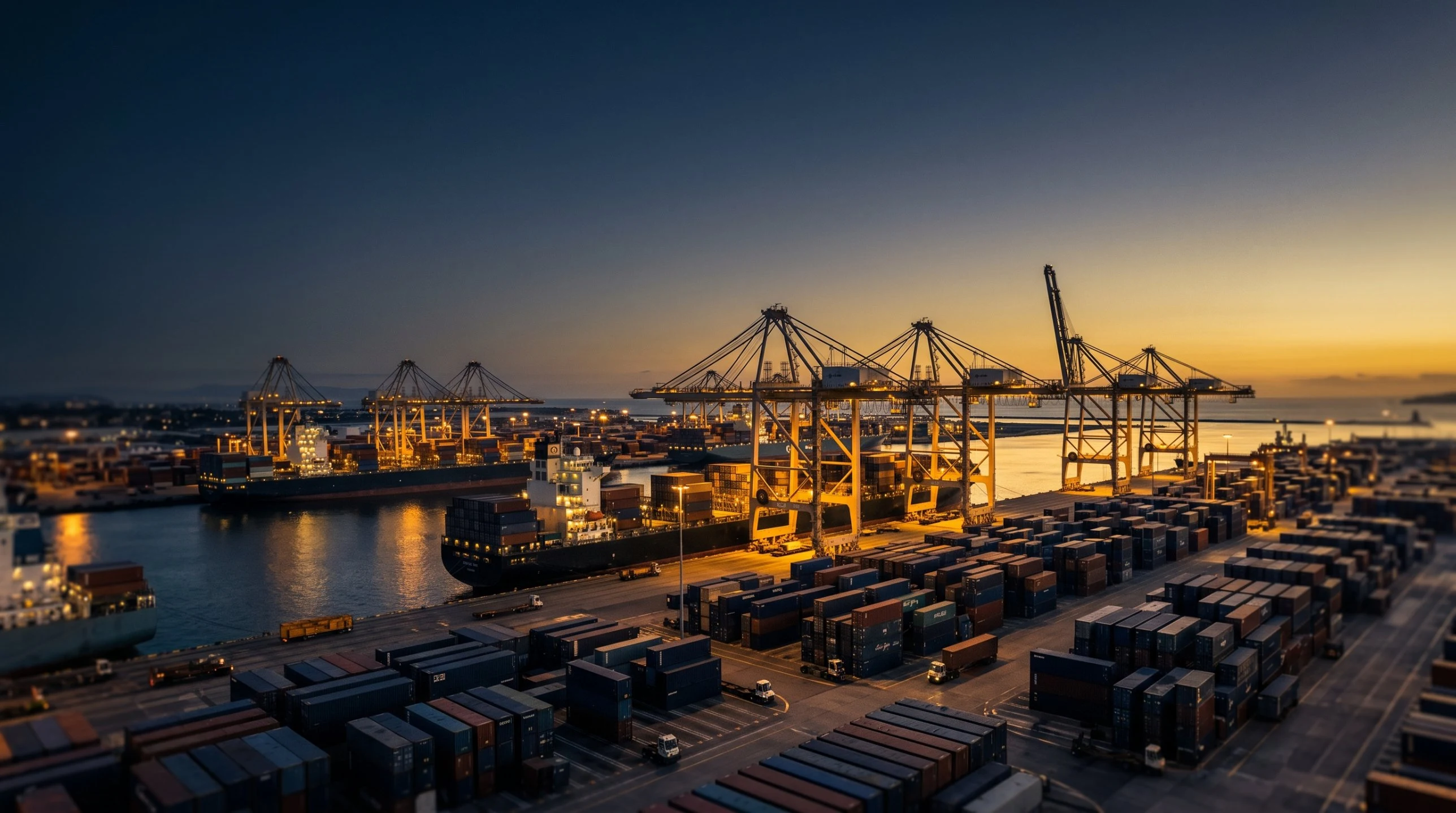
The mechanism the WTO describes is rerouting, not organic demand growth. The closure of the Strait of Hormuz disrupted fuel transport and cut shipments of oil, natural gas, and fertiliser moving through the Gulf, which weighed on global merchandise trade overall. But vessels and containers that could no longer move through the usual channels had to go somewhere, and shipping lines rerouted traffic to alternative ports and transshipment hubs outside the immediate conflict zone. Pakistan, and Karachi in particular, was one of the beneficiaries — its existing container-handling infrastructure and position outside the Gulf made it a practical stand-in route while the situation remained unsettled.
The WTO's broader report also credits a surge in AI-related capital investment with keeping the global economy resilient despite the conflict — AI-related goods accounted for 47% of global merchandise trade value growth in the first half of 2026. That's a separate dynamic from the shipping story, but it's worth noting that Pakistan's gains are tied specifically to the Gulf disruption and rerouting, not to this broader AI-driven trade expansion.
The Catch: A New Congestion Surcharge
The same WTO report flags a cost consequence of this rerouting that directly affects Pakistani importers. In July 2026, Mediterranean Shipping Company introduced a $500-per-container congestion surcharge on shipments from Northern Europe to India, Pakistan, Sri Lanka, and Bangladesh. The WTO's own language is blunt about where that cost is likely to land: these charges may ultimately be passed on to consumers. Longer waiting times and transit delays caused by the rerouting are raising costs for carriers, and carriers are recovering those costs through surcharges on the same routes that are supposedly benefiting from increased traffic.
That's the tension at the center of this story: more vessel traffic and higher throughput at Karachi's terminals is good for port revenue and the shipping sector's export numbers, but it coincides with — and partly causes — higher landed costs for importers bringing goods in from Europe on the affected routes.
| Metric | Figure | Source Period |
|---|---|---|
| Pakistan Sea Freight Transport Exports | +73% year-on-year | H1 2026 |
| Karachi Container Terminal Vessel Calls | +14% year-on-year | July 2026 |
| MSC Congestion Surcharge (N. Europe routes) | $500 per container | Introduced July 2026 |
| Global Merchandise Trade Growth Forecast | 3.9% (2026), 4.1% (2027) | WTO Oct 2026 update |
What This Means for Importers and Exporters Right Now
- Importers on Northern Europe–Pakistan routes should check current surcharge schedules before booking, since the $500-per-container charge is a direct, confirmed cost already in effect as of July 2026.
- Exporters benefiting from increased vessel frequency at Karachi should treat it as a window, not a guarantee — the WTO explicitly ties this traffic to the Gulf disruption, which could ease and reroute traffic away from Pakistan just as quickly as it arrived.
- Don't confuse rising port statistics with rising demand for Pakistani goods specifically — the 73% and 14% figures reflect transshipment and transit volume as well as genuine Pakistan-bound trade, a distinction worth keeping in mind when reading future headline port numbers.
- Budget for continued volatility in Europe-route freight costs rather than assuming current surcharges are temporary — the WTO's own framing suggests these cost pressures are tied to an unresolved regional disruption, not a one-off adjustment.
Our ocean freight team tracks carrier surcharge schedules on Europe routes closely, and we covered the other side of this story — the restored direct Europe sailing from Karachi — in our recent post on MSC's reinstated service, which is itself part of carriers adjusting routes and capacity around this same disruption.
Conclusion: A Real Gain, With Real Fine Print
The headline version of this story is genuinely good news: an international body has put concrete numbers behind what Pakistan's shipping and logistics sector has been experiencing all year, and 73% growth in sea freight transport exports is not a small figure by any measure. But the WTO's own report declines to tell that story without the fine print — a $500-per-container surcharge that the organization itself warns could reach consumers, and gains explicitly tied to a disruption elsewhere that could unwind as unpredictably as it began. For businesses moving freight through Pakistan right now, the practical takeaway is to capture the benefit of increased carrier activity and service options while staying clear-eyed about the surcharges and volatility that are arriving alongside it.
At Falcon Global Logistics, we help importers and exporters navigate exactly this kind of shifting cost and capacity landscape. Contact us today to get current, accurate freight cost estimates for your shipments.