
While most of the conversation around Pakistan's trade numbers has focused on the widening deficit we covered earlier this week, one export category is quietly doing more than its share of the heavy lifting: rice. Pakistan Bureau of Statistics data released September 25, 2026 shows rice exports for the first two months of FY27 (July–August) hit 658,610 metric tons worth $391.7 million — up 24.68% year-on-year. Basmati alone grew 53% in value terms. This isn't a one-off; it follows a December 2025 milestone where Pakistan briefly overtook Vietnam to become the world's third-largest rice exporter. For freight forwarders, a boom like this isn't just good news for exporters — it reshapes which lanes, ports, and equipment types are in demand.
The Numbers: Basmati Is Growing Faster Than Rice Overall
Of the 658,610 metric tons shipped in July–August FY27, basmati rice accounted for 145,731 tons worth $164.1 million — a 53.04% jump in value over the same period last year. Non-basmati varieties made up the larger volume at 508,878 tons worth $227.7 million, growing more modestly. The split matters: basmati is a higher-margin, reputation-driven product, and its outsized growth rate suggests Pakistani exporters are winning share in premium markets rather than just shipping more bulk tonnage.
That trend had already shown up in December 2025, when Pakistan's monthly rice exports hit 489,000 tons (excluding Iran-bound shipments) — a 14% month-on-month jump that pushed the country past Vietnam's 387,000 tons into third place globally, behind only India and Thailand. Basmati shipments alone grew more than 50% month-on-month in that period, Pakistan's best-ever monthly rice export performance on record.
Why Now: A US Tariff Opened the Door, and Pakistan Walked Through It
Part of the timing here isn't coincidental. A 50% US tariff on Indian rice has made Pakistani basmati more price-competitive in markets that would otherwise default to Indian supply. At the same time, foreign exchange shortages in Iran have made Pakistan's proximity and relative stability a more attractive sourcing option for Iranian buyers, even as formal export volumes there are reported separately. Together, these shifts have given Pakistani exporters room to grow share in markets they weren't previously winning on price alone.
The destination mix reflects this diversification. As of the December 2025 data, the UAE led as the single largest buyer (74,897 tons, including over 16,800 tons of basmati), followed closely by China (74,685 tons), with Tanzania, Kenya, and Ivory Coast rounding out the top five. Saudi Arabia, the EU, the UK, and Bangladesh remain significant buyers, while Central Asian markets — Kazakhstan and Uzbekistan — are newly emerging destinations worth watching.
What This Means for Port and Equipment Planning
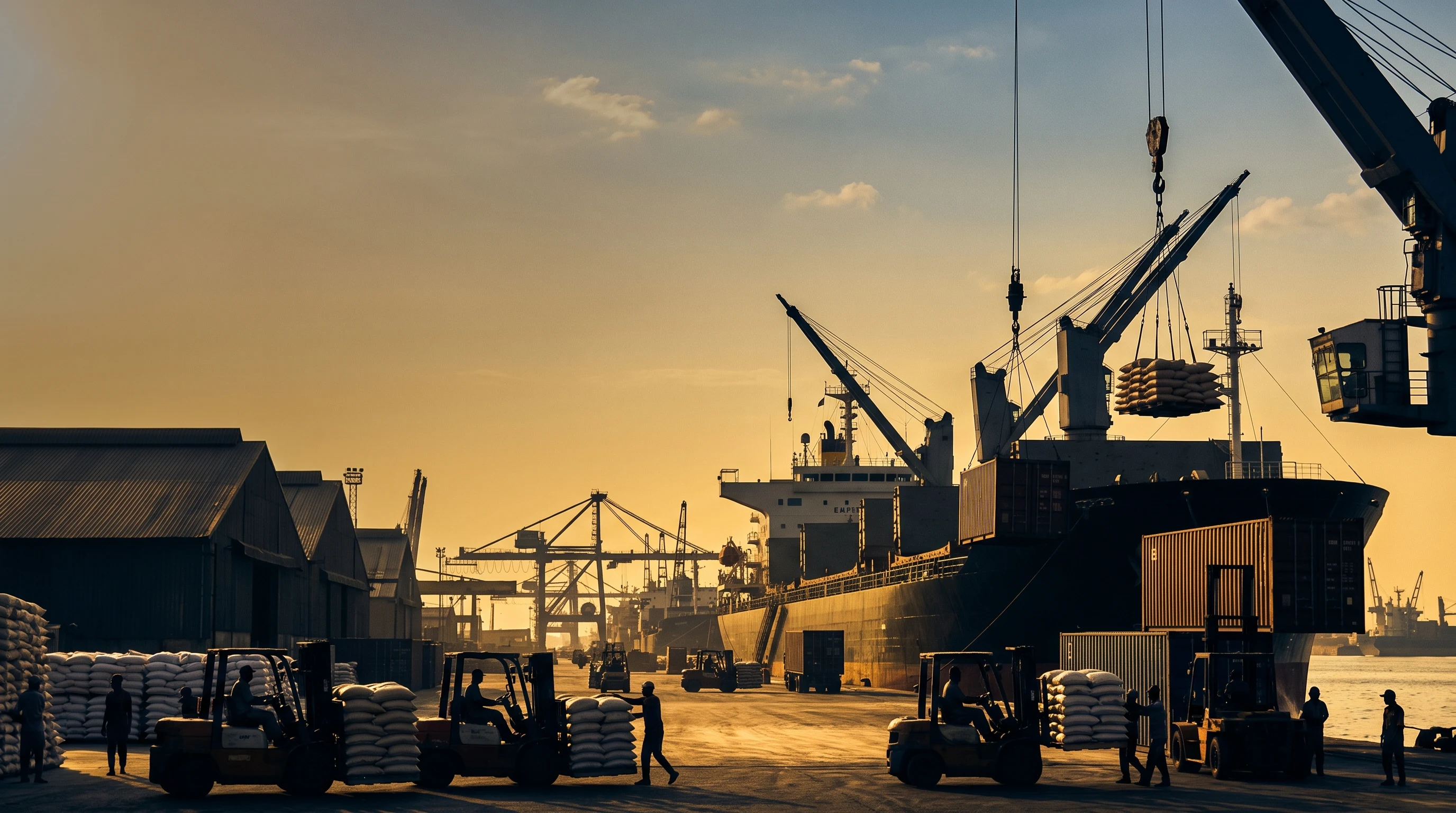
Rice is a bulk and bagged commodity, which means its export growth shows up differently at the berth than container-driven categories like textiles. Sustained growth at this pace points to continued strong demand for bulk carrier space, bagging and warehousing capacity near Karachi and Port Qasim, and reefer or standard container allocation for the smaller but higher-value basmati shipments bound for premium markets in the UAE, EU, and UK.
| Metric (Jul–Aug FY27) | Volume | Value | YoY Growth (Value) |
|---|---|---|---|
| Total Rice Exports | 658,610 MT | $391.7 million | +24.68% |
| Basmati Rice | 145,731 MT | $164.1 million | +53.04% |
| Other Rice Varieties | 508,878 MT | $227.7 million | — |
What This Means for Exporters and Freight Partners Right Now
- Rice exporters should book bulk and bagging capacity early during peak harvest and shipping windows — sustained double-digit growth means competition for vessel space will only intensify through the rest of FY27.
- Basmati exporters targeting premium markets should factor in the documentation and phytosanitary requirements specific to UAE, EU, and UK buyers, who are typically more rigorous on quality certification than bulk-tonnage markets.
- Exporters eyeing Central Asian markets should evaluate direct sea-and-rail routing now that it's proven viable for agri-cargo, rather than defaulting to the traditional and increasingly unreliable Afghan land corridor.
- Everyone shipping bulk agri-commodities through Karachi and Port Qasim should expect continued strong demand for bulk carrier slots, which can tighten availability and pricing during peak export months.
Our ocean freight team and import-export specialists help agri-exporters plan around seasonal booking pressure and emerging market documentation requirements, building on the same market-tracking approach we used in our recent coverage of Pakistan's widening trade deficit, where rice was flagged as one of the categories helping narrow the gap.
Conclusion: A Bright Spot Worth Watching Closely
Pakistan's rice sector is doing exactly what a government focused on "export-led growth" wants to see: genuine, premium-driven volume growth in a category where the country has a real competitive edge. For freight forwarders, that translates into concrete planning signals — more bulk carrier demand, more interest in Central Asian routing that bypasses Afghanistan, and a basmati segment worth prioritizing for exporters who can meet premium-market documentation standards. The trend line from December's third-largest-exporter milestone through this latest two-month data suggests this isn't a temporary spike.
At Falcon Global Logistics, we help agri-exporters navigate booking cycles, documentation, and emerging trade lanes as market conditions shift. Contact us today to discuss capacity planning for your rice or agri-export shipments.