
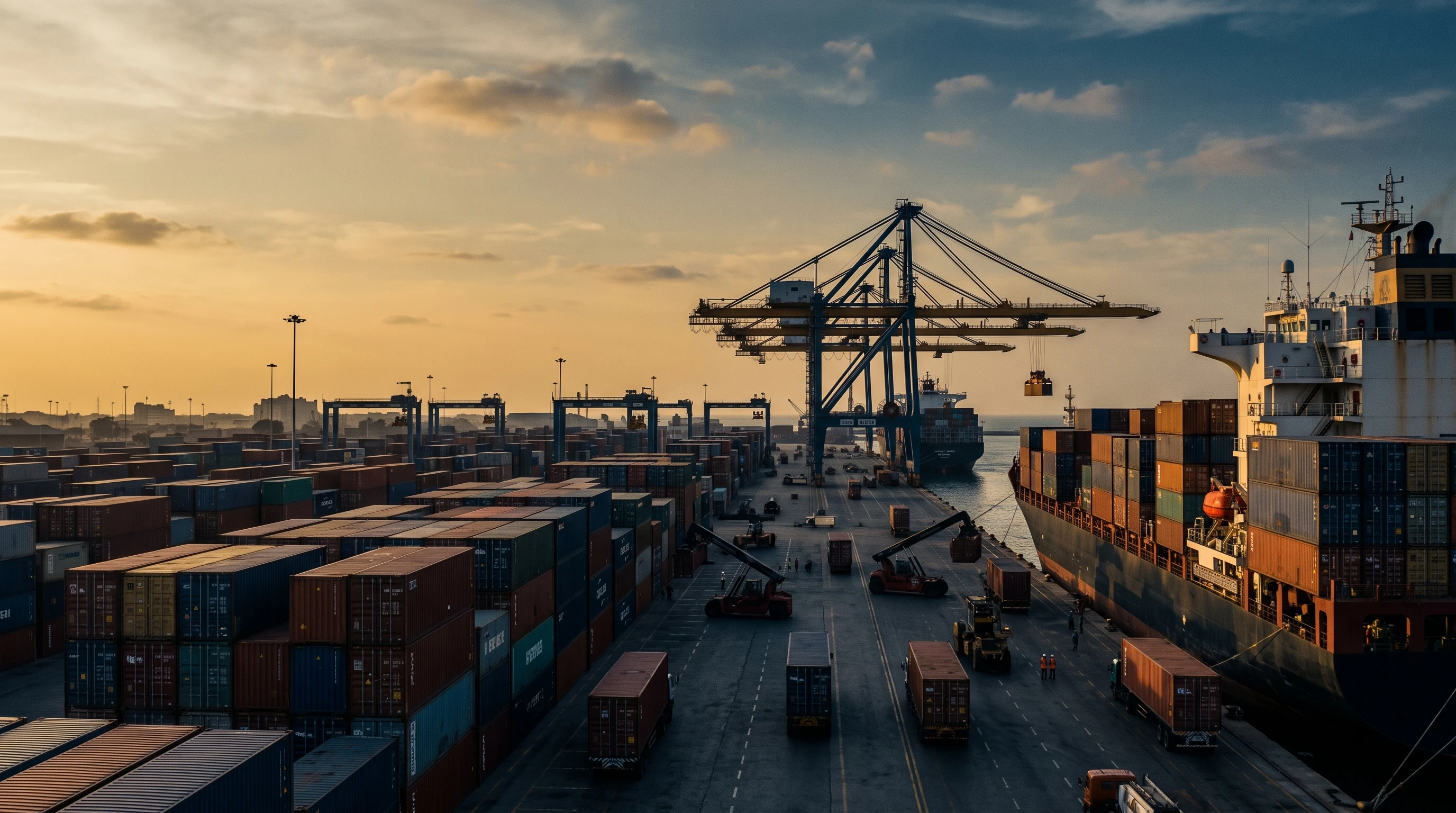
Pakistan Bureau of Statistics data released in early September put a number on something freight forwarders have felt on the ground for months: imports are growing roughly twice as fast as exports. The trade deficit for the first two months of FY27 (July–August 2026) came in at $7.12 billion, up 18.1% from the same period last year. That's not a one-month blip — it follows a July figure that was already running 25% above last year. For a freight forwarding business, a widening trade gap isn't just a macroeconomic headline. It's a leading indicator of inbound cargo pressure, port congestion risk, and the kind of import-tightening policy response Pakistan has used before.
The Numbers: Imports Outpacing Exports Two-to-One
Over July–August 2026, Pakistan's exports rose 7% year-on-year to $5.46 billion, while imports climbed 13% to $12.58 billion — nearly double the export growth rate. The gap between the two produced the $7.12 billion deficit, up from $6.03 billion in the same period of FY26. July on its own was starker still: exports of $2.94 billion against imports of $6.89 billion, a $3.95 billion deficit that was 25.4% wider than July 2025.
The import side of the ledger is being driven by energy and capital goods rather than consumer spending. Petroleum products and RLNG prices were running 40–50% higher year-on-year in July compared to the same month in 2025, and machinery imports for industrial and agricultural use stayed elevated as well. On the export side, a revival in rice shipments and steady textile volumes — which still account for 55–60% of total exports — provided most of the growth, but not nearly enough to offset the import surge.
Why This Isn't Just a Finance-Desk Story
A widening trade deficit has two direct, practical consequences for anyone moving freight in or out of Pakistan. The first is capacity pressure: sustained double-digit import growth, concentrated in bulk energy cargo and heavier machinery shipments, adds strain to berth availability, bonded warehouse space, and inland transport capacity at a time when Karachi's terminals are already running close to record throughput. The second is currency and policy risk. Pakistan's current account is sensitive to how quickly the trade gap widens, and the government has a documented history of responding to deficit pressure with import restrictions — the 2022 import compression episode being the clearest recent example, even though this year's PBS release itself notes the government's current focus is on "boosting exports, diversifying markets, and restricting non-essential imports."
That combination — a government already signaling intent to tighten non-essential imports while energy and machinery imports keep climbing — is worth watching closely if your supply chain depends on consistent import clearance timelines.
What a Tightening Cycle Would Look Like for Importers
If the deficit keeps widening at this pace through the rest of FY27, importers should expect the conversation in Islamabad to shift from monitoring to action. Past cycles have included tighter LC (letter of credit) issuance requirements, higher regulatory duties on non-essential imports, and slower documentation processing as State Bank and FBR prioritize essential goods. None of that is confirmed policy yet — but the pattern is familiar enough that importers who build in buffer time and diversify sourcing now will be better positioned than those who wait for an announcement.
| Metric (Jul–Aug FY27) | FY27 Value | YoY Change |
|---|---|---|
| Exports | $5.46 billion | +7% |
| Imports | $12.58 billion | +13% |
| Trade Deficit | $7.12 billion | +18.1% |
What This Means for Freight Partners Right Now
- Importers of energy, machinery, and industrial equipment should expect continued strong booking demand on inbound lanes — plan clearance and inland transport timelines with the current pace of growth in mind, not last year's volumes.
- Exporters should treat export growth as the variable that matters most to policy direction — a government focused on "boosting exports" as its deficit-narrowing lever is more likely to support export-facing infrastructure and incentives than to restrict outbound trade.
- Businesses reliant on non-essential imports should build contingency plans now for potential LC or duty tightening, rather than waiting for a policy announcement to force a scramble.
- Everyone moving cargo through Karachi should factor continued bulk and project-cargo import pressure into berth and yard planning, on top of the transshipment volumes we've covered in earlier posts.
Our import-export and clearing and forwarding teams track these macro shifts specifically because they show up at the berth and the bonded warehouse weeks before they show up in a policy notification — the same approach we take to monitoring import policy changes as they develop.
Conclusion: A Number Worth Watching Monthly
An 18% wider trade deficit in two months doesn't mean a crisis is imminent, but it does mean the gap between what Pakistan buys and what it sells abroad is growing at a pace that historically draws a policy response. For freight forwarders and their clients, the practical takeaway isn't to panic — it's to plan for continued inbound volume pressure on energy and machinery lanes, keep a closer eye on export-side momentum as the government's preferred lever, and build flexibility into import documentation timelines before any tightening cycle, if it comes, forces the issue.
At Falcon Global Logistics, we help importers and exporters read these macro signals in operational terms — capacity, documentation, and timing — rather than just headline numbers. Contact us today to talk through how current trade trends affect your shipment planning.