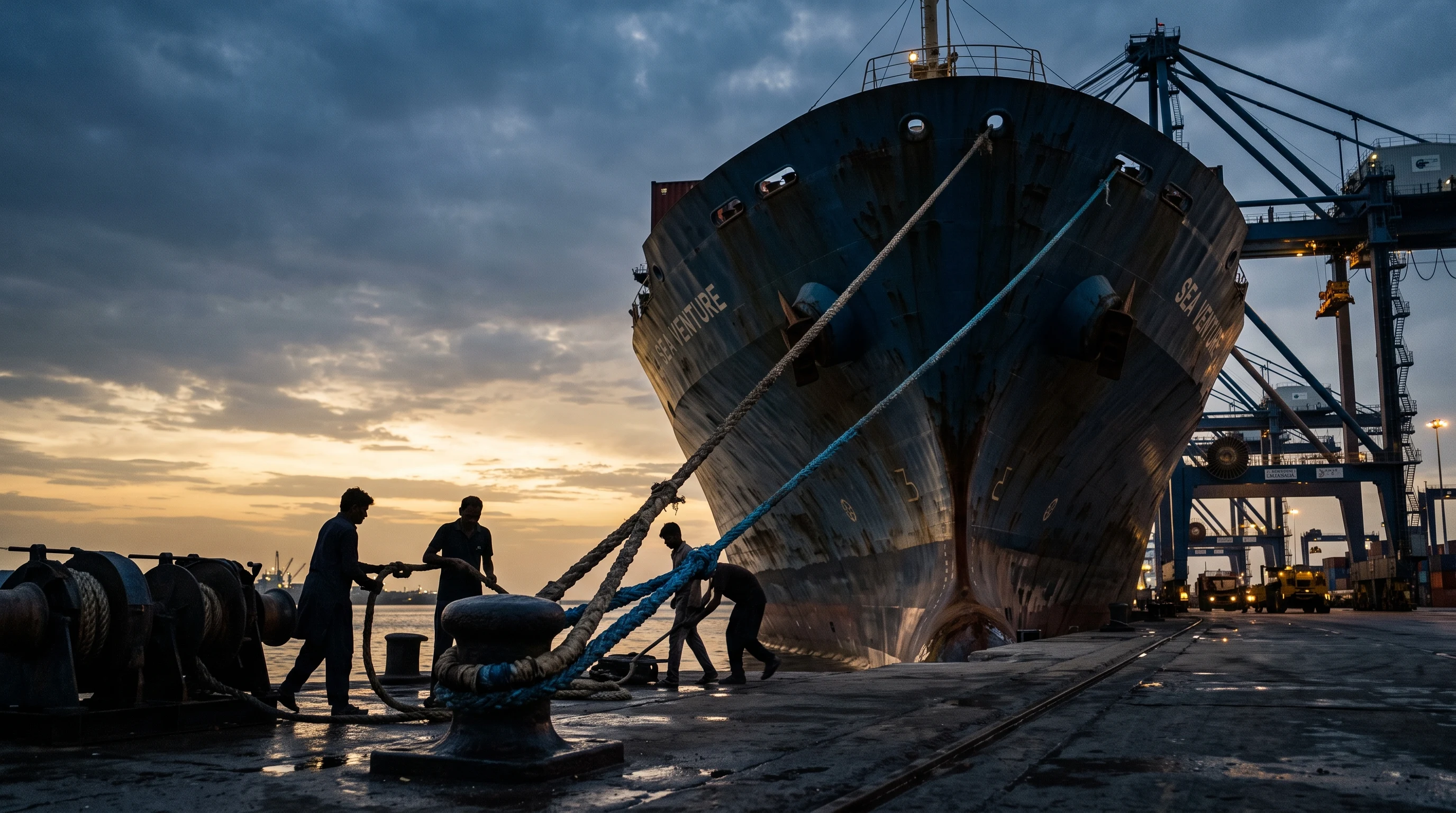
On October 1, 2026, Pakistan's Federal Minister for Maritime Affairs, Muhammad Junaid Anwar Chaudhry, met with a delegation of major exporters — including representatives from Adidas and Style Textile — who raised a specific, practical complaint: changes to regional shipping routes have increased both transit times and costs to the EU and US, leaving Pakistani exporters at a disadvantage against regional competitors with more direct market access. The response under discussion is notable precisely because of what it would be a first for: Pakistan National Shipping Corporation (PNSC) leasing or buying a dedicated container vessel, something the state carrier does not currently operate.
What's Actually Being Proposed
The proposal is conditional, not confirmed. The minister was explicit that PNSC would only move forward "if enough cargo can be guaranteed to make the service commercially viable." A working group comprising the Ministry of Maritime Affairs, PNSC, and the exporter delegation has been formed to assess feasibility, and the exporters present agreed to consult more broadly with their industry peers before submitting formal proposals. No cargo volume threshold, timeline, or vessel specification has been made public yet — this is a feasibility assessment, not a procurement order.
Why Exporters Are Asking For This Now
The exporters' complaint — longer routes, higher costs, slower transit to Western markets — tracks with disruptions we've been covering all year: Red Sea rerouting around the Cape, Strait of Hormuz risk premiums, and blank sailings during peak season. What's different here is the proposed remedy. Rather than simply absorbing higher freight costs from foreign carriers who control routing decisions, major exporters are asking whether a national-flag option could give Pakistan some leverage over its own container capacity and scheduling — particularly relevant for large buyers like Adidas, who have enough standing order volume to anchor a feasibility case.
This isn't a new grievance. Textile industry groups have separately pushed for years for PNSC's "revival," citing global logistics firms raising freight and courier rates by as much as 70% over extended periods and arguing that a functioning national carrier could help keep freight costs in check for export-dependent SMEs who have no negotiating leverage with foreign shipping lines.
| Factor | Current State | What's Being Considered |
|---|---|---|
| PNSC Fleet Type | Oil tankers, bulk carriers (10 vessels) | Addition of dedicated container vessel |
| Decision Status | Exporter request raised Oct 1, 2026 | Working group assessing feasibility |
| Commercial Condition | N/A | Contingent on guaranteed cargo volume |
What a Realistic Timeline Looks Like
Given PNSC's own 2025 fleet-expansion plan phases new vessels in over a three-year window (13 in year one, 8 in year two, 3 in year three, reaching 34 by 2028), a container vessel addition — if approved — would likely follow a similarly extended procurement and commissioning timeline rather than appearing within months. The explicit "commercially viable" condition also means this depends on exporters actually following through with volume commitments, not just raising the idea. Forwarders and exporters should treat this as a signal worth tracking over the next one to two quarters rather than an imminent capacity change.
What This Means for Exporters and Freight Partners Right Now
- Large exporters with consistent EU/US-bound volume should consider whether participating in the working group's cargo-commitment process could secure them more predictable capacity and pricing down the line.
- SME exporters should watch how any formal proposal treats smaller shippers — a national container line's value proposition is strongest if it extends negotiating leverage beyond the largest players who initiated the request.
- Nobody should treat this as a near-term capacity fix. Even in the best case, PNSC's own fleet-expansion track record suggests a multi-quarter-to-multi-year process from feasibility assessment to vessel in service.
- Forwarders should keep an eye on the working group's output as a leading indicator of whether Pakistan's broader maritime capacity push extends into containerized cargo, not just the bulk and tanker segments its current modernization plan targets.
Our ocean freight team tracks these capacity and policy developments closely, the same way we've followed Pakistan's trade balance and export sector growth this quarter — all of which point to the same underlying pressure on freight capacity and routing.
Conclusion: A Signal Worth Watching, Not Yet a Change
What happened on October 1 wasn't a policy announcement — it was exporters formally asking the government to consider something Pakistan's state shipping carrier has never operated: its own container vessel. Whether it goes anywhere depends entirely on whether exporters can actually guarantee the cargo volumes to make it commercially viable, and on how quickly a historically slow-moving fleet-expansion process can move. For now, the right response for freight partners is to track the working group's progress, not to plan around a capacity change that hasn't been approved.
At Falcon Global Logistics, we help exporters navigate current capacity realities while watching for developments like this that could reshape options down the line. Contact us today to discuss your current container booking strategy.