The Gulf is one of Pakistan's most important export markets, and the conflict around the Strait of Hormuz has hit it hard. On November 11, the Commerce Ministry presented its assessment, Impact of Iran Conflict on Pakistan's Trade with GCC, to a parliamentary committee. According to Arab News, Pakistan's exports to the six Gulf Cooperation Council (GCC) states fell by a cumulative $387 million between March and October 2026 compared with the same period a year earlier. Container freight from Karachi to some Gulf ports rose more than fourfold.
Quick answer: The worst of the drop came between March and June, when GCC exports fell 32.3%. From July to October the decline narrowed to 6.4% as exporters adapted. Freight costs remain far above pre-conflict levels, so exporters to the Gulf should quote all-in rates for a fixed sailing window. Consider air freight for meat and perishables, and agree in writing who carries surcharges.
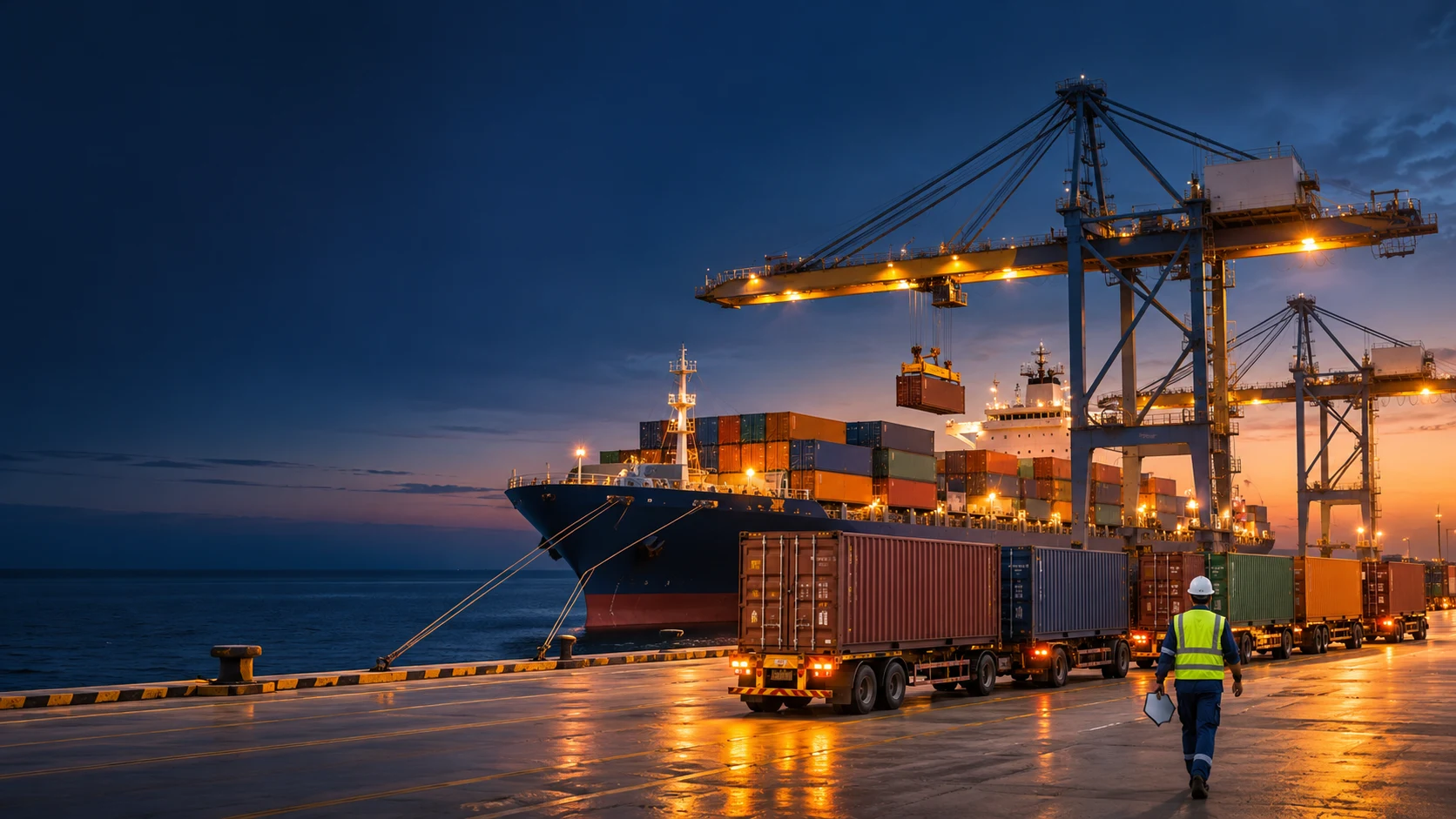
Illustrative AI-generated image. It does not depict a specific terminal, vessel or shipment.
What the Commerce Ministry's figures show
The ministry's figures compare each period with the same months of 2025. The fall was sharpest just after the conflict began, then eased:
| Market / period | Change in Pakistan's exports |
|---|---|
| All GCC, March–June 2026 | Down $316.9 million (32.3%) |
| All GCC, July–October 2026 | Down $69.8 million (6.4%) |
| All GCC, March–October 2026 (cumulative) | Down $387 million |
| UAE (initial phase) | Down 42.7% ($264.8 million) |
| Qatar (initial phase) | Down 49.8% ($15 million) |
| Kuwait | Down 38.7% |
| Oman | Down 25.1% |
| Bahrain | Down 13.3% |
| Saudi Arabia | Down 1.7% |
Two points stand out. First, the UAE carried most of the loss in value, which matters because it is the largest Gulf destination for Pakistani goods. Second, Saudi Arabia barely moved. Its main ports on the Red Sea coast, such as Jeddah, can be reached without passing through the Strait of Hormuz, while Kuwait, Qatar and Bahrain lie inside the Gulf.
Freight costs from Karachi rose four to six times
The ministry's figures for a 40ft dry container from Karachi show how much more it costs to reach Gulf ports:
| Route (40ft dry container) | Before the conflict | Reported now |
|---|---|---|
| Karachi → Hamad (Qatar) | $1,300–1,900 | $8,500–8,800 |
| Karachi → Shuwaikh (Kuwait) | $1,800–2,000 | About $8,500 |
| Karachi → Jebel Ali (UAE) | $1,200–2,000 | $5,000–6,000 |
The ministry attributes the increase to higher war-risk insurance premiums, container shortages, longer routes and airspace closures. These are reported ranges, not quotes. Your actual rate depends on carrier, sailing date, equipment and surcharges.
Individual carriers have also added surcharges on top of base rates. On reefer cargo to the UAE, for example, Hapag-Lloyd announced a $500 peak season surcharge for early November sailings.
What the government has done so far
According to the ministry's presentation, the response so far includes:
- An inter-ministerial committee, formed in March, coordinating daily to reduce transport and port costs.
- Dedicated cargo flights, especially for meat exports.
- Lower negotiated air freight rates with Emirates, Gulf Air and Jazeera Airways.
- Port handling charges cut by up to 60%.
- Alternative routes and markets, including the Khunjerab–Sost road border with China and shipments redirected to Southeast Asia and Africa.
Commerce Secretary Jawad Paul told the committee: "As soon as the conflict started, the impact was highly visible."
Separately, Dawn reported on November 9 that a new weekly feeder service links Karachi with Khor Fakkan, on the UAE's east coast outside the Strait of Hormuz. Dawn also reported that Pakistani ports have been removed from Lloyd's war-risk list.
What this means for exporters to the Gulf
- Price for today's freight. Get all-in quotes with every surcharge listed, valid only for a stated sailing window. Our sea freight team can compare carriers.
- Choose the destination port with your buyer. A port on the UAE's east coast, Oman's coast or Saudi Arabia's Red Sea coast may avoid the most expensive inner-Gulf routings. Agree any change in the contract.
- Use air where it pays. For perishables and urgent consignments, ask about current air rates on the routes where the government negotiated lower prices. See our air freight services.
- Pick your sales term deliberately. Selling FOB Karachi shifts ocean freight and insurance risk to the buyer. Selling CFR or CIF gives you control of the booking but leaves you carrying the rate risk.
- Protect payment. Longer and less predictable transits tie up working capital. Consider advance payment or a confirmed letter of credit with new buyers.
- Track status before committing. Confirm vessel and cargo status before promising delivery dates. Our Karachi port guide explains how.
Conclusion
The Commerce Ministry's figures show both the damage and the recovery. Gulf exports fell by almost a third in the first months of the conflict, and the gap has since narrowed to 6.4%. But freight to inner-Gulf ports still costs four to six times its pre-conflict level, and the waterway remains contested. Exporters who quote all-in, choose ports and transport modes carefully, and protect their payment terms are best placed to keep Gulf buyers. For common questions on rates, documents and customs, see our shipping FAQ.
Sources and reporting notes
- Arab News: Pakistan suffers $387 million Gulf export shortfall due to US-Iran war (November 12, 2026): Commerce Ministry figures on exports, freight rates and government measures, and the Commerce Secretary's quote.
- Dawn: Maritime trade, cashing in on shifting trade routes (November 9, 2026): Karachi–Khor Fakkan feeder service and war-risk listing.
Information checked November 12, 2026. Freight figures are ranges reported by the Commerce Ministry, not quotes; rates and routings change frequently. This article is general shipping information.
Exporting to the Gulf? Contact Falcon Global Logistics with your cargo, destination port and target shipment date so sea and air options can be compared.