
Karachi Port and Port Qasim handle most of Pakistan's seaborne trade, and 2026 has been an unusually busy year for both. Rerouting caused by the Strait of Hormuz disruption pushed more ships toward Karachi. Terminal operators have been deepening berths, and the government has changed transshipment rules. For an importer or exporter, the useful question is not whether the port is busy but what that means for your own container. This guide brings together what the official figures show and how to check your own shipment's status.
Quick answer: Karachi's port activity and connectivity rose in 2026, according to KPT, the Press Information Department and the WTO. Bulk berths at the Karachi Gateway multipurpose terminal can now take larger ships. But port-wide numbers don't predict when your container will be released. Check the KPT daily vessel board, confirm your vessel and cargo status with the carrier, and get any revised arrival date in writing.
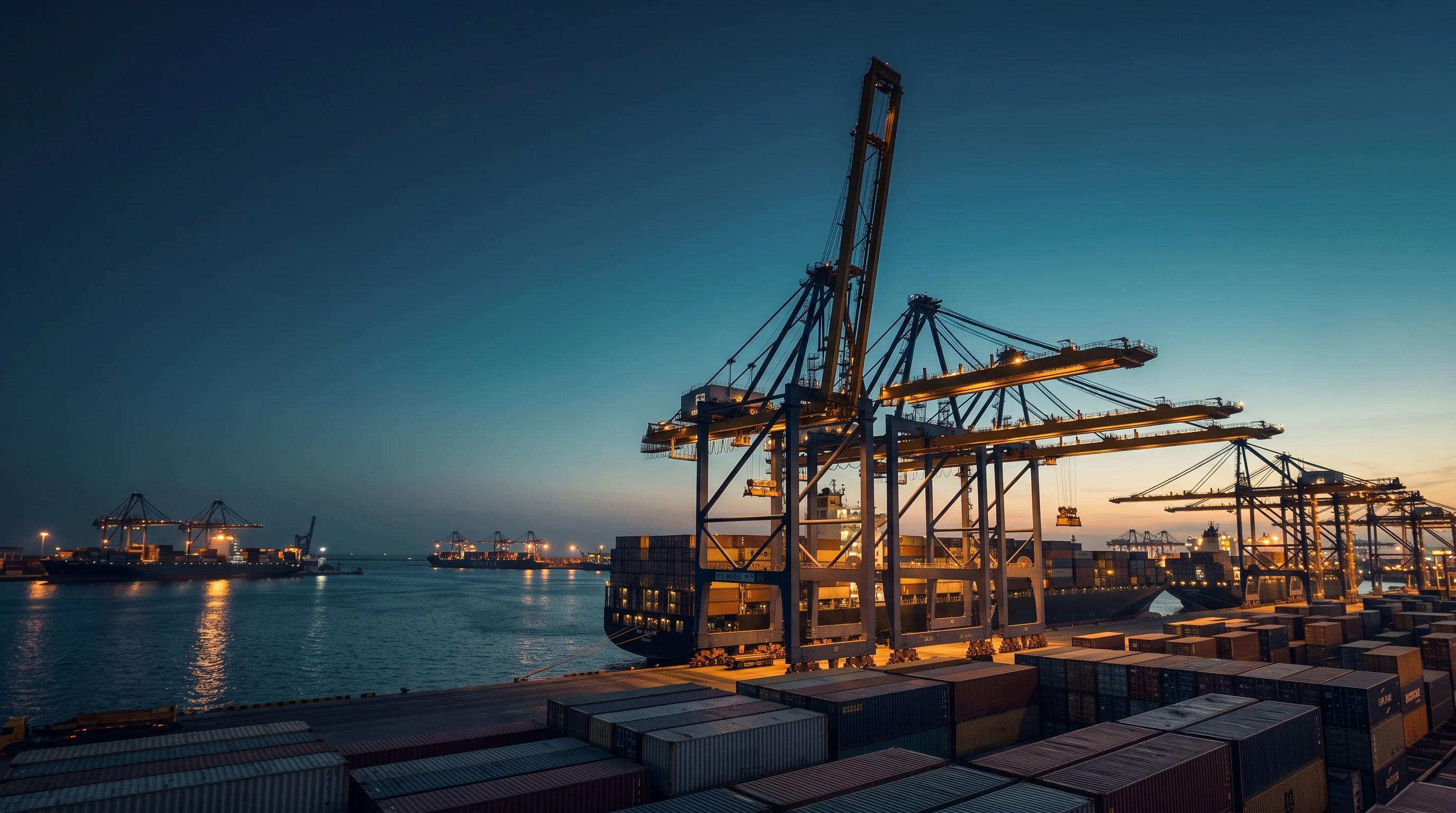
Illustrative image. It does not depict a specific terminal, vessel or shipment.
What the official port figures show
| Indicator | Figure | Period | Source |
|---|---|---|---|
| Cargo handled at Karachi Port | 59.466 million tonnes | March 2025 – March 2026 | KPT performance report |
| Containers handled | 2.945 million TEUs | March 2025 – March 2026 | KPT performance report |
| Vessels handled | 2,182 | March 2025 – March 2026 | KPT performance report |
| Vessel calls | 2,003 (up 7.5%) | Through June 13, 2026 | PID, June 15, 2026 |
| Port Liner Shipping Connectivity Index | 343.02 (Q1: 309.81) | Q2 2026 | PID, September 17, 2026 |
| Vessel calls at major container terminals | Up 14% year-on-year | July 2026 | WTO Global Trade Outlook, October 2026 |
Each figure has its own period and unit, so they should not be added together or compared directly. Vessel calls and gross tonnage measure ship activity, not cargo volume. The connectivity index measures how well Karachi is linked into liner networks; it doesn't promise a particular sailing, rate or transit time.
Why traffic rose: rerouting and transshipment
The WTO's October 2026 outlook says Pakistan's sea freight transport services exports rose 73% year-on-year in the first half of 2026. It attributes this to rerouting: when the Strait of Hormuz disruption closed usual Gulf routes, shipping lines moved traffic to ports outside the conflict zone, and Karachi was one of them.
Government policy also changed. In March 2026, FBR issued SRO 525(I)/2026 on transshipment cargo. In August, the government announced a unified package of transshipment incentives for Karachi Port and Port Qasim to attract regional cargo.
Higher activity is not free for importers. The same WTO report notes that MSC introduced a $500-per-container congestion surcharge in July 2026 on shipments from Northern Europe to India, Pakistan, Sri Lanka and Bangladesh. The WTO warns that such charges may be passed on to consumers. When you compare quotes from Europe, ask whether a congestion or security surcharge is included.
Bigger ships at the Karachi Gateway bulk terminal
Karachi Gateway Terminal Multipurpose Ltd (KGTML), run by a joint venture of AD Ports Group and Kaheel Terminals, has completed dredging of its channels and berths. Its chief executive, Khurram Aziz Khan, told Arab News in October 2026 that:
- the terminal can now handle bulk vessels of up to about 120,000 tons, up from Handymax ships of about 60,000 tons
- about $200 million has been invested in the upgrade
- the company estimates traders could save over $150 million a year in freight, but only if bulk shippers actually move cargo onto larger vessels
New bulk-handling cranes were expected by December 2026. Treat the savings estimate as the operator's projection, not a guaranteed cut in your freight bill. It matters most for grain, fertiliser and other bulk importers who can consolidate into larger parcels.
How to check your own shipment's status
A busy-port headline or a single day's cargo total cannot tell you whether your container is delayed. Use this workflow instead:
- Check the vessel. Look up your ship on the KPT daily vessel board to see expected arrivals, ships alongside and departures.
- Ask the carrier or its agent. Confirm whether your vessel is alongside, at anchorage, delayed or omitted from the current rotation.
- Check your cargo, not just the ship. Confirm discharge progress, delivery order status, and any customs or examination hold against your bill of lading and goods declaration.
- Get changes in writing. Ask for a revised arrival date and the reason. A vessel delay, a cargo release delay and an inland trucking delay are three different problems with different fixes.
- Recheck before committing. Do this before you book trucks, warehouse space or production slots, or promise a delivery date to your buyer.
If your cargo moves through Port Qasim, check with the carrier and the Port Qasim terminal directly. Karachi Port updates do not describe the separate facility. KPT also publishes historical port statistics and a daily tonnage report. They are useful context, but they say nothing about an individual consignment.
What this means for importers and exporters
- Exporters: better connectivity can mean more service options. Still confirm the exact service, port rotation and transshipment point for each booking.
- Importers from Europe: check quotes for congestion or security surcharges, which have risen with rerouted traffic.
- Bulk importers: ask whether consolidating into a larger vessel at KGTML is practical for your volumes and supplier terms.
- Everyone: plan buffers for document approval, examination and inland delivery, and follow the five-step check above when timing matters.
For help with booking and release at either port, see our sea freight and clearing and forwarding services. For digital filing, read our PSW and ValidAP guide.
Sources and reporting notes
- Karachi Port Trust: Performance Report, March 2025 – March 2026
- Press Information Department, June 15, 2026: vessel calls and gross tonnage through June 13.
- Press Information Department, September 17, 2026: Port Liner Shipping Connectivity Index.
- WTO Global Trade Outlook and Statistics, October 2026 update: sea freight services exports, vessel calls and the MSC congestion surcharge.
- FBR SRO 525(I)/2026: transshipment rules, March 2026.
- Business Recorder: Govt unveils unified transshipment incentives for KPT, Port Qasim (August 2026)
- Arab News, October 8, 2026: KGTML dredging, investment and savings estimate.
- Karachi Port Trust daily vessel board
This guide replaces five earlier Falcon Global Logistics posts on Karachi port activity, transshipment, congestion and the KGTML upgrade; their links now lead here. Information checked November 4, 2026. Port figures are published with different periods and units; confirm shipment-specific details with your carrier or terminal.
Shipping through Karachi or Port Qasim? Contact Falcon Global Logistics with your bill of lading or booking details and we can check the current status with you.