
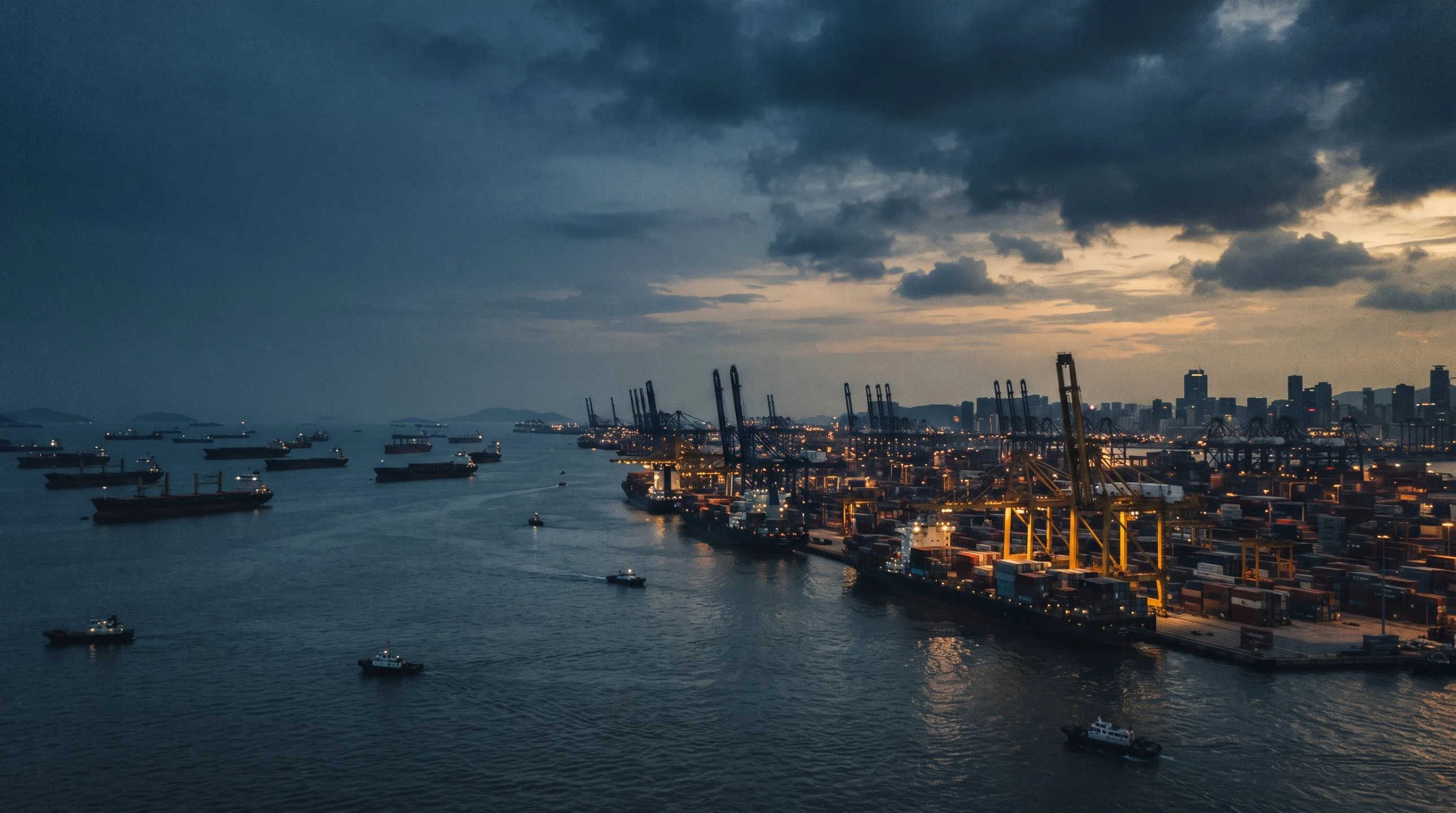
On Saturday, October 17, Karachi Port Trust reported that the port handled 157,668 metric tonnes of cargo in a single 24-hour window — a headline number that looks like good news for Pakistan's trade capacity. But the same report carried a second number that matters more for anyone with cargo moving through Karachi right now: 27 vessels were expected to arrive between October 17 and 18, with no departures scheduled in that same window. A busy port and a backed-up port can look identical in the daily tonnage figures. The difference shows up in your berthing window, and that's the number worth watching before it becomes your delay.
Who This Applies To
This is most relevant if you have an FCL or LCL shipment currently in transit to or from Karachi Port, a booking confirmed for the next one to two weeks, or a downstream commitment — a buyer delivery date, a factory production schedule, a customs bond deadline — that assumes your cargo clears on the original ETA. If your cargo moves through Port Qasim rather than Karachi Port directly, the same queue dynamics are worth tracking since vessel congestion at one facility often pushes overflow traffic toward the other.
The Numbers Behind the Snapshot
Here's what Karachi Port Trust's October 17 reporting actually showed, broken down:
| Metric | Figure |
|---|---|
| Total Cargo (24 hours) | 157,668 tonnes |
| Imports | 96,511 tonnes |
| Exports | 61,157 tonnes |
| Containerized Cargo | 80,862 tonnes |
| Bulk Cargo | 36,074 tonnes |
| Liquid Cargo | 35,540 tonnes |
| Vessels Berthed | 20 |
| Vessels Departed (24 hrs) | 6 |
| Vessels Anchored (Outer Harbour) | 5 |
| Vessels Expected (Oct 17-18) | 27, with zero scheduled departures |
Five Steps to Protect Your Shipment Timeline This Week
1. Confirm Your Vessel's Actual Berthing Window — Not the Original ETA
A booking confirmation's estimated arrival date is a planning figure, not a guarantee, and that gap widens exactly when the outer harbour has vessels at anchor. Ask your carrier or forwarder for the vessel's current position and realistic berthing estimate rather than relying on the schedule you were given at booking.
2. Get Documentation Complete Before the Ship Arrives, Not After
When berth time is scarce, cargo with incomplete paperwork loses its place in the queue to cargo that's ready to move. Make sure your Bill of Lading, commercial invoice, packing list, and any required certificates are finalized and with your clearing agent before the vessel is alongside, not once it has already berthed.
3. Ask About Alternate Terminal or Berth Options
Karachi Port and Port Qasim operate multiple terminals with different congestion levels at any given time. A forwarder with active visibility across terminals can sometimes route around a specific bottleneck rather than simply waiting it out — worth a direct conversation if your cargo has flexibility on destination terminal.
4. Build Two to Three Days of Buffer Into Downstream Commitments
If you've promised a buyer or a production line a delivery date calculated directly off the vessel's original ETA, a congestion signal like this one is the moment to quietly build in a buffer rather than discovering the delay after the fact. It's far easier to under-promise now than to explain a missed date later.
5. Track Karachi Port Trust's Daily Vessel Traffic Updates Directly
Port authorities publish daily vessel position and cargo-handling updates. Checking these directly — or having your forwarder check them on your behalf — gives you a day-by-day read on whether the queue is clearing or building, rather than relying on a single snapshot.
Our clearing and forwarding team tracks vessel and berth conditions at both Karachi Port and Port Qasim daily, so documentation and customs filing are never the reason a shipment sits in queue longer than it has to.
Frequently Asked Questions
Does a busy cargo day at Karachi Port always mean delays are coming?
Not automatically. High tonnage with vessels departing on schedule reflects a port working efficiently. The specific warning sign in this report is the combination of multiple vessels at anchor, a high number of inbound arrivals, and zero scheduled departures in the same window — that combination, not the tonnage figure alone, is what signals a potential backup.
Does this affect air freight shipments too, or only ocean freight?
This specific congestion signal is about vessel and berth capacity, so it's primarily relevant to ocean freight (FCL, LCL, and bulk). If a sea freight backlog is severe enough, some time-sensitive cargo does get shifted to air freight as a workaround, which is worth discussing with your forwarder if your delivery date has no flexibility at all.
How can I tell if my specific shipment is affected?
Ask your forwarder for your vessel's current status against the carrier's published schedule, specifically whether it's currently at berth, at anchor, or still inbound. A vessel sitting at anchor in the outer harbour, rather than alongside a berth, is the clearest individual-shipment signal that queue conditions are affecting your cargo directly.
Should I consider routing through Port Qasim instead of Karachi Port?
It depends on your cargo type and existing bookings — Port Qasim and Karachi Port each handle different cargo mixes and can have independent congestion patterns at any given time. This is a conversation to have with your ocean freight specialist rather than a default switch, since rebooking has its own costs and timing risks.
Conclusion
A 157,668-tonne day is, on its own, a sign of a port doing real volume. Twenty-seven inbound vessels with no scheduled departures, reported in the same window, is the detail that turns a good headline into a planning signal. Neither number guarantees what happens next — congestion can clear within days if departures catch up to arrivals — but shippers who check berth status and tighten documentation now will handle whichever way it goes better than those who only notice once a specific container is sitting at anchor. For context on the longer-term capacity picture, see our coverage of the KGTML dredging upgrade and our earlier look at Karachi Port's record cargo volumes this year.
At Falcon Global Logistics, we monitor berth and vessel conditions at Karachi Port and Port Qasim daily so your shipment's documentation and customs clearance are never the bottleneck. Contact us today for a real-time status check on your shipment.