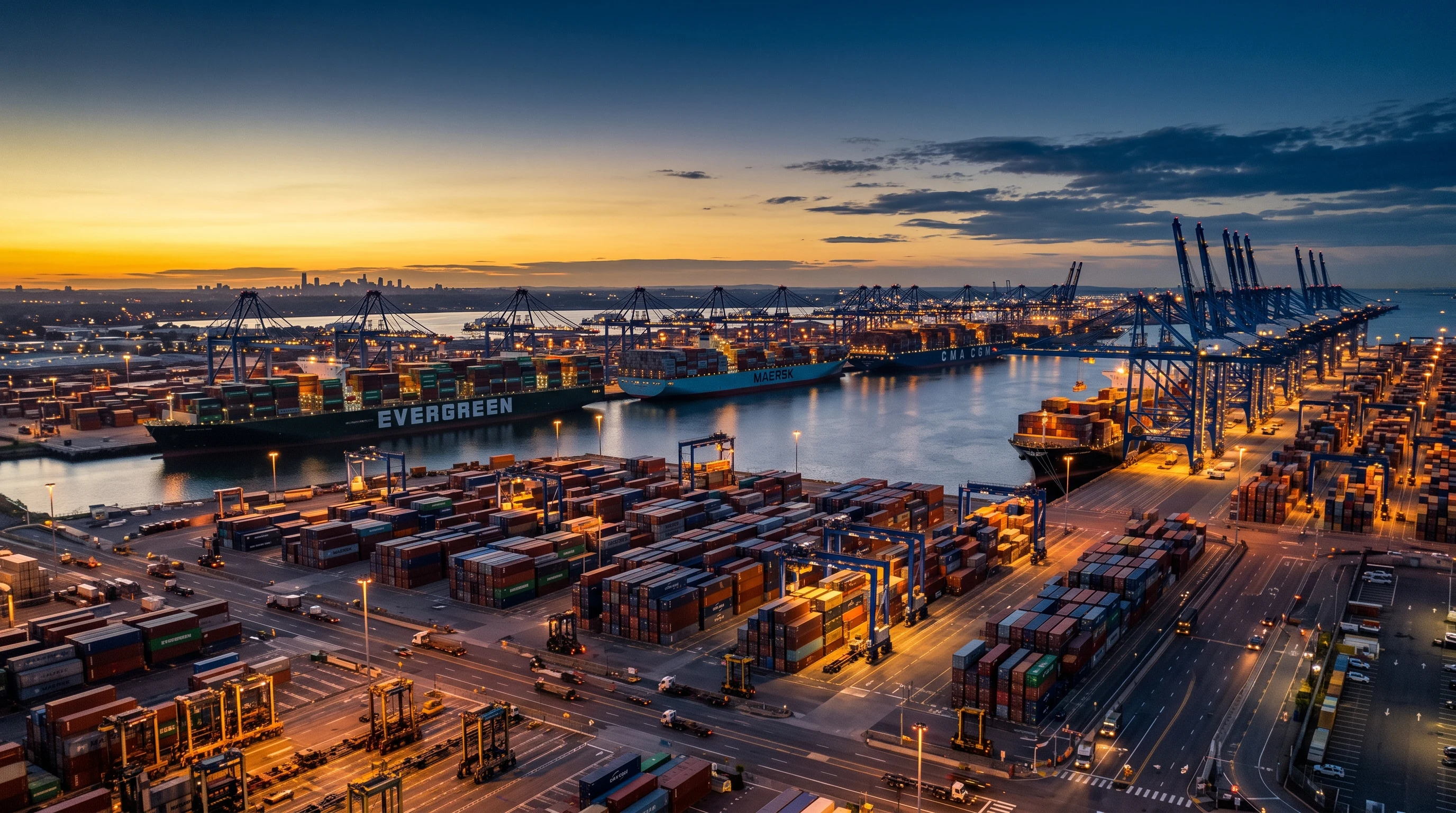
Karachi Port just posted the best year in its 138-year history. In the last financial year, the port handled 55.8 million tonnes of cargo — up from 53 million tonnes the year before — the highest cargo throughput it has ever recorded, driven by 2,115 ship calls. At the same time, its Liner Shipping Connectivity Index climbed to a record 343.02 in Q2 2026, up from 309.81 just one quarter earlier, moving Pakistan up to 34th globally in shipping connectivity. At Falcon Global Logistics, we operate out of Karachi every day, and these numbers confirm what we've been seeing on the ground: this is genuinely more activity moving through the port than at any point before. The question for importers and exporters is what that growth means for their own shipments right now.
Two Records, One Underlying Story: Karachi Is More Connected Than Ever
The cargo tonnage record and the connectivity record are really two sides of the same development. Part of the volume increase came from disruptions to global shipping routes elsewhere creating new transshipment opportunities that Karachi was positioned to capture. Pakistan's Federal Maritime Affairs Minister, Muhammad Junaid Anwar Chaudhry, described the improved connectivity as something that "could support trade flows, improve access to global markets and create opportunities for exporters and importers" — and a higher LSCI score in practice means more shipping line options, more frequent sailings, and better access to a wider range of destinations without needing to route cargo through a secondary hub first.
For businesses shipping in and out of Karachi, more direct routing options is a genuine, practical improvement — one that can translate into shorter transit times and more competitive freight rates over time, as carriers compete harder for a piece of a busier port.
The Other Side of Record Growth: Congestion Pressure
Record cargo volumes don't arrive without friction. Vessel arrivals at Karachi's two main terminals — KICT and SAPT — jumped 14.3% year-over-year to 56 vessels in July 2026 alone, while container throughput rose 12% to over 52,000 TEUs. That kind of sustained increase in traffic puts real pressure on clearance capacity, and it's exactly the kind of growth that, left unmanaged, turns into the demurrage costs, delayed pickups, and unpredictable clearance timelines every importer dreads.
Pakistan Customs has responded directly this month rather than waiting for the backlog to grow further:
| Measure | Detail |
|---|---|
| Increased Examinations | 4,298 cargo examinations in July 2026, up from 4,007 a year earlier |
| Extended Operating Hours | Optimal staffing deployed, including operations on Sundays for extra clearance capacity |
| Off-Dock Container Shifts | Over 2,000 long-pending containers moved to off-dock facilities to free up terminal space |
| Scanning Technology | Non-intrusive inspection scanners installed at major ports |
| Faceless Assessment | New system rolled out to speed up processing and reduce manual bottlenecks |
A senior customs official indicated the department was aiming to resolve the immediate congestion situation within the week — a fast-moving response that's worth watching, since it means clearance conditions at Karachi could genuinely improve over the coming weeks even as underlying cargo volumes keep climbing.
What This Means for Your Shipments Right Now
- Expect variability in clearance timelines over the next few weeks. Customs is actively working through a backlog — that's good news longer-term, but it means individual shipment timelines may still be inconsistent in the short term as the new measures take full effect.
- Get your documentation right the first time. With increased examinations already running above last year's pace, incomplete or inconsistent paperwork is more likely to trigger a manual hold rather than clear on autopilot.
- Ask your forwarder whether your containers are being held on-dock or shifted off-dock. The off-dock relocation program is specifically designed to speed up recovery of long-pending containers — knowing which facility your cargo sits at changes your pickup planning.
- Treat improved connectivity as a reason to review your routing, not just your customs process. A higher LSCI score means it's worth asking your freight partner whether a more direct sailing option now exists for lanes that previously required transshipment.
Our clearing and forwarding team is tracking these customs measures daily as they roll out, so our clients get accurate, current clearance estimates rather than pre-surge assumptions. For background on the customs environment underpinning all of this, see our earlier coverage of Customs Clearance 2026: New Regulations for Pakistan Importers.
Conclusion: Growth Worth Celebrating, Managed Carefully
Karachi Port's record cargo volumes and improved global connectivity are unambiguously good news for Pakistan's trade position — more shipping options, stronger international links, and a port proving it can capture opportunity when global routing shifts in its favor. The congestion that comes with that growth is a real, near-term challenge, but it's one Customs is actively managing rather than ignoring. Importers and exporters who stay informed on both sides of this story — the opportunity and the pressure — will navigate this surge more smoothly than those reacting shipment-by-shipment.
At Falcon Global Logistics, our Karachi-based team tracks port and customs conditions in real time so your shipments move as efficiently as current conditions allow. Contact us today for an up-to-date clearance and freight timeline for your next shipment.