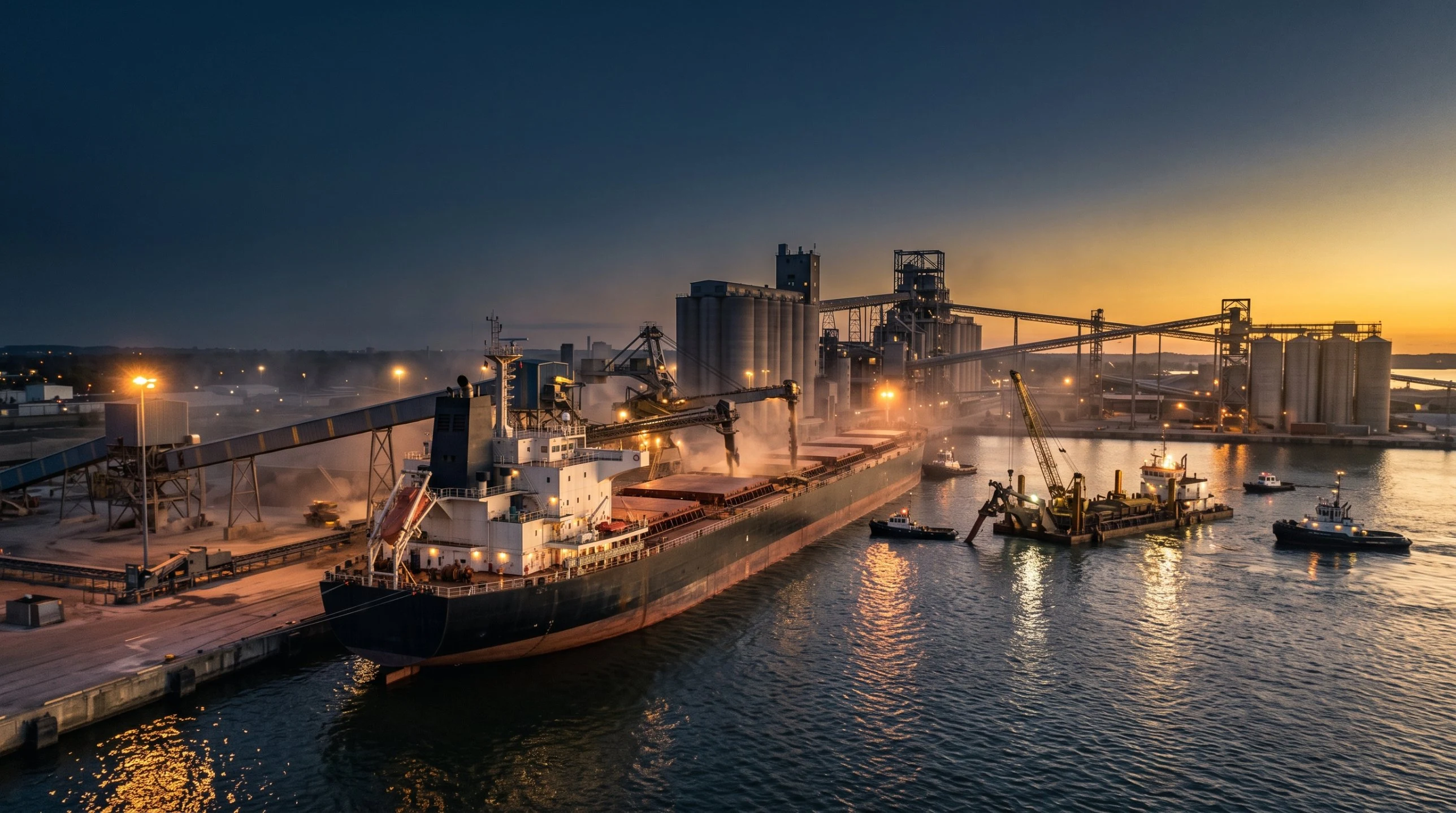
Karachi Gateway Terminal Multipurpose Limited (KGTML) has completed a dredging project that changes what kind of ships can call at Karachi's bulk and general cargo berths. The terminal, a joint venture between Abu Dhabi-based AD Ports Group and UAE-based Kaheel Terminals, says its channels and berths can now handle vessels of roughly 120,000 tons — double the previous ceiling of about 60,000 tons, which limited the port to Handymax-class ships. CEO Khurram Aziz Khan told Arab News the company has invested approximately $200 million in the upgrade and projects it could eventually save bulk shippers more than $150 million a year through larger vessels and faster handling. For importers and exporters moving grain, fertilizer, and other bulk commodities through Karachi, this is a capacity story with real numbers behind it, not just another "port modernization" announcement.
What Actually Changed at the Berth
The core change is straightforward: deeper channels and berths mean bigger ships can dock. Before this dredging, KGTML's adjoining terminals were capped at Handymax vessels of around 60,000 tons. Now the terminal is positioning itself for post-Panamax ships at roughly double that tonnage. Khan described the prior limitation plainly: "Prior to that dredging, our port was only equipped to handle Handymax vessel which means a 60,000-ton vessel at max." Alongside the dredging, KGTML is adding approximately 18 million tons of storage capacity — split roughly between 9 million tons of silo capacity and 8.5 to 9 million tons of warehouse space — and plans new bulk-handling cranes and conveyor systems, expected by December 2026, aimed at cutting ship unloading times.
The $150 Million Claim, and the Caveats Behind It
Khan's projection is specific but conditional. He estimates that shifting bulk cargo onto larger vessels and achieving faster turnaround could cut freight costs by 25-35% per shipment. On that basis, he says savings could exceed $50 million in the first year if roughly 20% of bulk volumes move to larger ships, growing to "crossing $150 million per annum" as adoption increases. Those numbers depend on two things happening together: shipping lines actually committing larger vessels to Pakistan-bound bulk routes, and the terminal achieving the efficiency gains needed to turn them around quickly. Neither is guaranteed on the stated timeline, and the company itself frames the larger figure as a target reached gradually rather than an immediate result.
One concrete timeline commitment stands out: KGTML is targeting a reduction in agricultural cargo turnaround from more than 10 days currently to within three days. That's a meaningful operational claim for anyone shipping grain or other agri-bulk commodities, where demurrage and vessel waiting time are often a larger cost driver than the base freight rate itself.
| Metric | Before | After / Target |
|---|---|---|
| Max Vessel Size | ~60,000 tons (Handymax) | ~120,000 tons (post-Panamax) |
| Investment | — | ~$200 million |
| Added Storage Capacity | — | ~18 million tons |
| Agri Cargo Turnaround | 10+ days | Target: within 3 days |
| Projected Freight Savings | — | 25-35% per shipment; up to $150M/year |
Why This Fits a Broader Pattern at Karachi
This upgrade lands alongside other signals that Karachi's operators are actively competing for bulk and transshipment cargo rather than relying on existing volumes. KGTML is reportedly in discussions with shipping lines about Gulf-bound cargo amid ongoing disruption around the Strait of Hormuz, and is working with the government on a "stock and sale" arrangement as well as a regional distribution hub with Louis Dreyfus Company. Khan also mentioned a new shipping service for exporters that could start "next month" — though as of publication no carrier has been named and no agreement has been signed, so that detail should be treated as a forward-looking claim rather than a confirmed service.
Taken together with the ocean freight rate increases we've covered on the container side, Karachi's port infrastructure is moving in a direction that could partially offset rising freight costs for bulk shippers specifically — even as container rates on other trade lanes continue climbing.
What This Means for Importers and Exporters Right Now
- If you move bulk commodities through Karachi, ask your forwarder whether larger vessels are already being scheduled on your specific trade lane — capacity existing at the terminal doesn't mean it's being used yet on your route.
- Track the December 2026 crane installation date as a real milestone — until the new bulk-handling equipment is operational, faster turnaround claims remain aspirational rather than achieved.
- Agri-bulk importers should watch the 3-day turnaround target closely, since demurrage savings from faster unloading could materialize well before any large-vessel freight savings do.
- Don't commit to pricing based on the $150 million industry-wide figure — that's an aggregate, multi-year projection, not a guaranteed per-shipment discount available today.
Our clearing and forwarding team stays current on terminal capacity changes at Karachi's ports, helping bulk importers and exporters plan shipments around real operational timelines rather than press-release projections.
Conclusion
KGTML's dredging completion is a genuine infrastructure milestone — doubling vessel capacity at a major Karachi terminal is not a small claim, and the $200 million investment behind it is real. But the $150 million annual savings figure is a projection built on assumptions that haven't yet played out: shipping lines redeploying larger vessels, new cranes arriving on schedule, and turnaround times actually falling to the targeted three days. Bulk importers and exporters should treat this as a capability to watch closely over the next few months, not a cost saving to build into next quarter's budget just yet.
At Falcon Global Logistics, we help bulk and general cargo shippers navigate exactly these kinds of infrastructure transitions. Contact us today to discuss your bulk cargo shipping plans through Karachi.