
Pakistani rice is selling well abroad this year. Dawn reported on November 2, citing Vietnam's foreign trade agency, that Pakistan shipped 420,000 tonnes of rice in September 2026, ahead of Vietnam's 337,000 tonnes. Pakistan's average export price was also higher, at $621 a tonne against $563. Dawn also reported that rice export volumes rose 51% and earnings 37% in July–September. The same report warns that higher ocean freight, marine insurance and inland costs, shipment delays and longer payment cycles are eating into margins.
Quick answer: Shipping rice from Pakistan means getting six things right: export registrations, a container plan that keeps grain dry, the correct export documents (including the phytosanitary certificate), booking from Karachi or Port Qasim, an all-in freight price, and payment terms that protect you during longer transit times.
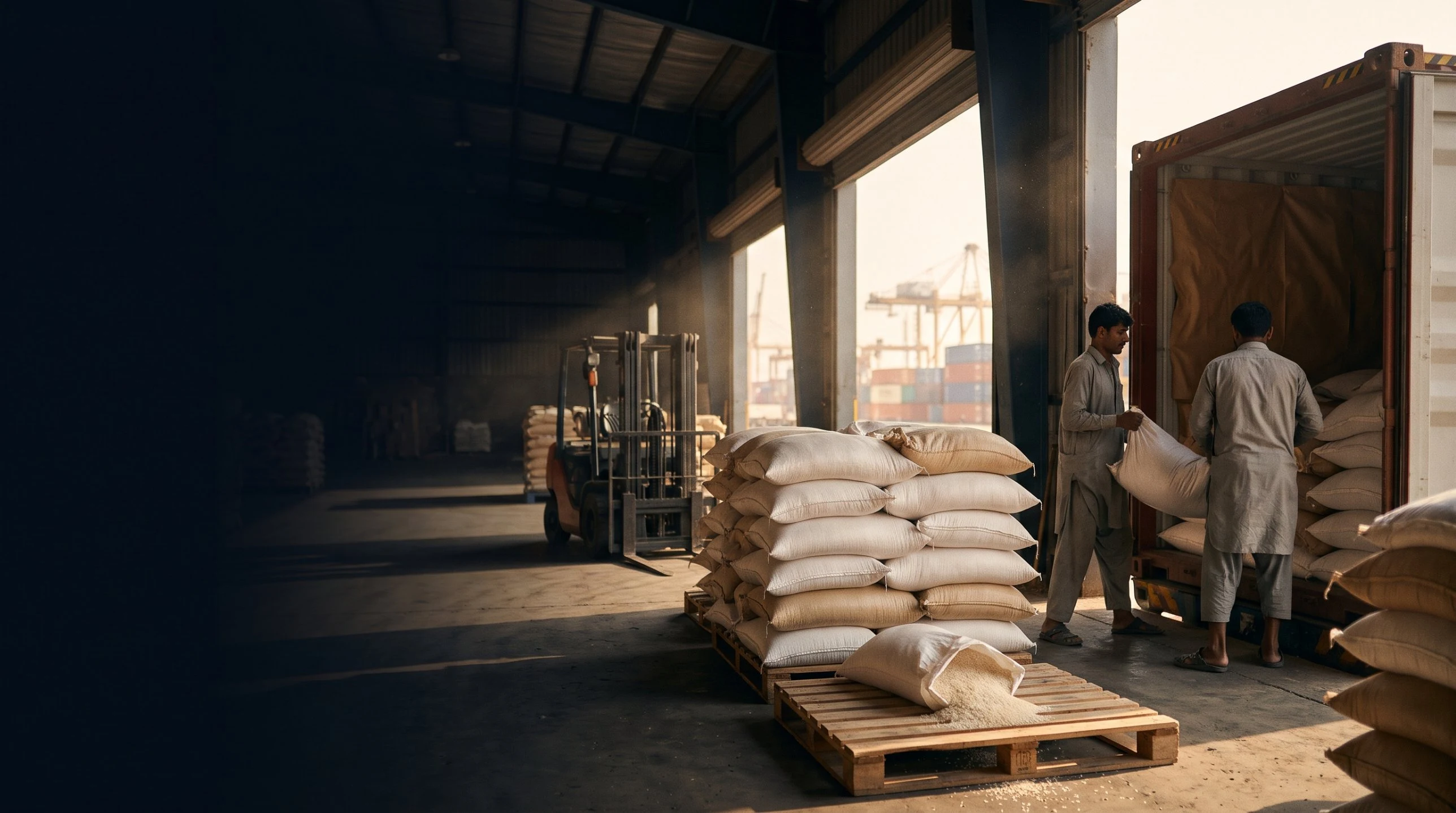
Illustrative AI-generated image. It does not depict a specific exporter, warehouse or shipment.
Who this guide is for
This guide is for Pakistani rice exporters shipping containers, especially newer exporters. It is also for buyers abroad, such as importers in the Gulf, Europe and Africa, who want to understand what happens before the cargo leaves Pakistan. It covers containerized shipments. Bulk vessel shipments of non-Basmati rice follow a different chartering process and are not covered here.
Step 1: Get your export registrations in place
Before your first shipment, you need the basic export registrations. TDAP's step-by-step guide for new exporters lists:
- a National Tax Number (NTN) from FBR
- a bank account for export proceeds
- membership of a Chamber of Commerce and the relevant trade association
- a customs user ID for filing goods declarations
For EU buyers, TDAP's guide also mentions registration in the EU's REX system for origin statements. Rice exporters should also check current membership requirements with the Rice Exporters Association of Pakistan (REAP).
Step 2: Plan the container to keep rice dry
Moisture is the biggest physical risk for rice in a container. Grain carries moisture and sea voyages bring big temperature swings, so water condenses inside the box (often called "container rain"). It can wet the top layers of bags and cause mould or caking. Common precautions are:
- inspecting the container for holes, rust and odour before stuffing
- lining the walls and floor with kraft paper or a container liner
- using desiccant bags
- stuffing only rice that is within the moisture level agreed in the contract
Most rice moves in 20ft containers because rice is heavy. A 20ft box usually reaches its weight limit before it is full, so plan the load by weight, not space. Confirm the maximum payload with the carrier and check any road weight limits for the truck run from the mill to the port.
Step 3: Prepare the export documents
Buyers and destination authorities expect a consistent set of documents. The core set for a rice shipment usually includes:
- Commercial invoice and packing list: they must match each other and the goods declaration exactly, including weights and the number of bags.
- Goods declaration: filed with Pakistan Customs through the electronic system, either by you or your clearing agent.
- Phytosanitary certificate: issued by the Department of Plant Protection for plant products, confirming the consignment meets the importing country's plant health rules.
- Fumigation certificate: where the buyer or destination country requires it. TDAP's guide lists fumigation and phytosanitary certificates together for agricultural exports.
- Certificate of origin: issued through the Chamber of Commerce or TDAP's system, and needed for any trade preference.
- Bill of lading and insurance certificate: issued once the cargo is shipped. The insurance certificate is needed if you sell on CIF terms.
- Quality, weight or lab certificates: where the contract asks for them, often from a third-party inspection company.
Destination rules differ. EU buyers in particular apply strict limits on pesticide residues and contaminants and may ask for lab results before shipment. Ask your buyer for their exact document list in writing before the rice is milled and packed.
Step 4: Book from Karachi or Port Qasim
Most containerized rice leaves through Karachi Port or Port Qasim. Plan the booking around three things:
- Equipment: food-grade containers in good condition may be scarcer than ordinary boxes in busy months, so book them early.
- Cut-offs: missing the documents or container gate-in cut-off can roll your cargo to the next vessel.
- Transit and routing: routes have changed during this year's Middle East disruption, so confirm the vessel's actual route and estimated arrival in writing.
Our sea freight team can confirm current sailings and equipment availability.
Step 5: Price freight and insurance on an all-in basis
Dawn's report notes that freight rates and marine insurance premiums rose sharply this year, and that the rice sector has no freight subsidy or state-funded marine insurance. That makes the freight line one of the biggest risks to your margin. When quoting a buyer:
- get an all-in freight quote, including surcharges such as bunker, security or peak season charges, not just the base rate
- make the quote valid only for a stated sailing window
- add a clause that passes on carrier surcharges announced after the quote date
The same approach applies to the short Gulf trade. Our article on the recent reefer surcharge on the UAE route shows how quickly carrier surcharges can change. If you sell FOB, the buyer arranges and pays the ocean freight, which shifts most of this freight-rate risk to them.
Step 6: Protect payment during longer transits
Dawn's report cites longer payment cycles as one of the costs of this year's disruption. Longer voyages mean your money is tied up for longer, especially on open-account or cash-against-documents terms. Options include:
- asking for an advance payment
- using a confirmed letter of credit for new buyers
- using export credit or insurance products offered by your bank
Make sure the bank receives the shipping documents and export proceeds paperwork on time, as required under State Bank rules.
Frequently asked questions
Is rice usually shipped in 20ft or 40ft containers?
Mostly 20ft. Rice is dense, so a 20ft container reaches its weight limit before its space is used up, and a 40ft box costs more without carrying proportionally more weight. Confirm payload limits with the carrier for your exact booking.
Who issues the phytosanitary certificate for rice exports?
The Department of Plant Protection (under the Ministry of National Food Security & Research) issues phytosanitary certificates for plant products leaving Pakistan. Apply early, since inspection and fumigation must fit before the port cut-off.
Should I sell rice FOB or CIF in 2026?
FOB leaves the buyer to arrange and pay ocean freight and insurance, which protects you when rates are volatile. CIF lets you control the booking and can win buyers who want a delivered price, but you carry the freight and insurance risk. If you sell CIF, quote for a fixed sailing window and include a surcharge clause.
What is the most common cause of rice cargo damage?
Moisture and condensation inside the container. Careful moisture checks before stuffing, liners and desiccants, and sound containers prevent most claims.
Conclusion
Pakistan's rice exports are growing, but higher freight, insurance and financing costs mean margins depend on getting the logistics right. Get the registrations and documents in order first. Protect the grain from moisture, quote freight on an all-in basis, and choose payment terms that match the longer transit times. For more on the market itself, see our earlier coverage of the Basmati export surge and how freight costs and Indian competition affect rice exporters. Our import-export team can help plan the full shipment from mill to destination port.
Market background: the 2026 rice export picture
This guide also replaces two earlier Falcon Global Logistics posts on rice exports. The market context they covered:
- A strong start to FY27: Pakistan Bureau of Statistics data for July–August 2026 showed rice exports of 658,610 tonnes worth $391.7 million, up 24.68% year on year. Basmati value rose about 53%.
- A longer decline behind it: industry analysis reported by Business Recorder in October 2026 put Pakistan's rice exports at about 4.3 million tonnes worth $2.3 billion in FY2026, down from a record 6 million tonnes worth $3.89 billion in FY2024. India shipped a record 21.57 million tonnes over the same period. Industry sources cited a price gap of roughly $250 a tonne in India's favour on Basmati.
- Government support: the Drawback of Local Taxes and Levies (DLTL) scheme gave rice exporters support of 9% on Basmati and 3% on non-Basmati at first, later raised to 5% for non-Basmati and extended to September 30, 2026.
For exporters, the logistics point is the same one this guide makes throughout: in a price-competitive market, freight, insurance and document mistakes can wipe out a thin margin.
Sources and reporting notes
- Pakistan Bureau of Statistics: external trade statistics: FY27 rice export volumes and values.
- FAO Rice Market Monitor: international rice market context.
- Dawn: Pakistan outperforms Vietnam in rice exports (November 2, 2026): September 2026 export volumes and prices, Q1 FY27 growth, freight, insurance and payment-cycle pressures.
- TDAP: Step-by-Step Guide for New Exporters, Export Procedures: registrations, export documents, phytosanitary and fumigation certificates, certificate of origin, and export proceeds paperwork.
Information checked November 3, 2026. Document requirements vary by destination country and buyer; confirm the current list with your buyer, the Department of Plant Protection and your bank before shipment. This article is general shipping information, not legal or regulatory advice.
Exporting rice from Karachi? Contact Falcon Global Logistics with your tonnage, destination port and target shipment month so freight and documentation can be planned together.