
For Pakistani importers buying from China, the choice between a full container (FCL) and a shared container (LCL) used to be simple: if the goods nearly filled a box, take FCL; if not, consolidate. That rule of thumb is harder to trust in 2026. In early October, Arab News reported that China-to-Pakistan container freight had risen from about $2,000–2,400 to $4,000–4,500 per container, citing industry figures. When the price of a whole box roughly doubles, the point at which FCL becomes cheaper than LCL moves too.
Quick answer: LCL is usually cheaper for small shipments, but it adds handling at consolidation warehouses and can be held up by other shippers' cargo. FCL costs more per box but gives you control, fewer touches and a cleaner customs process. Air is for urgent, light or high-value goods. Work out your own break-even volume from current quotes before deciding. A rule of thumb from last year's rates may now be wrong.
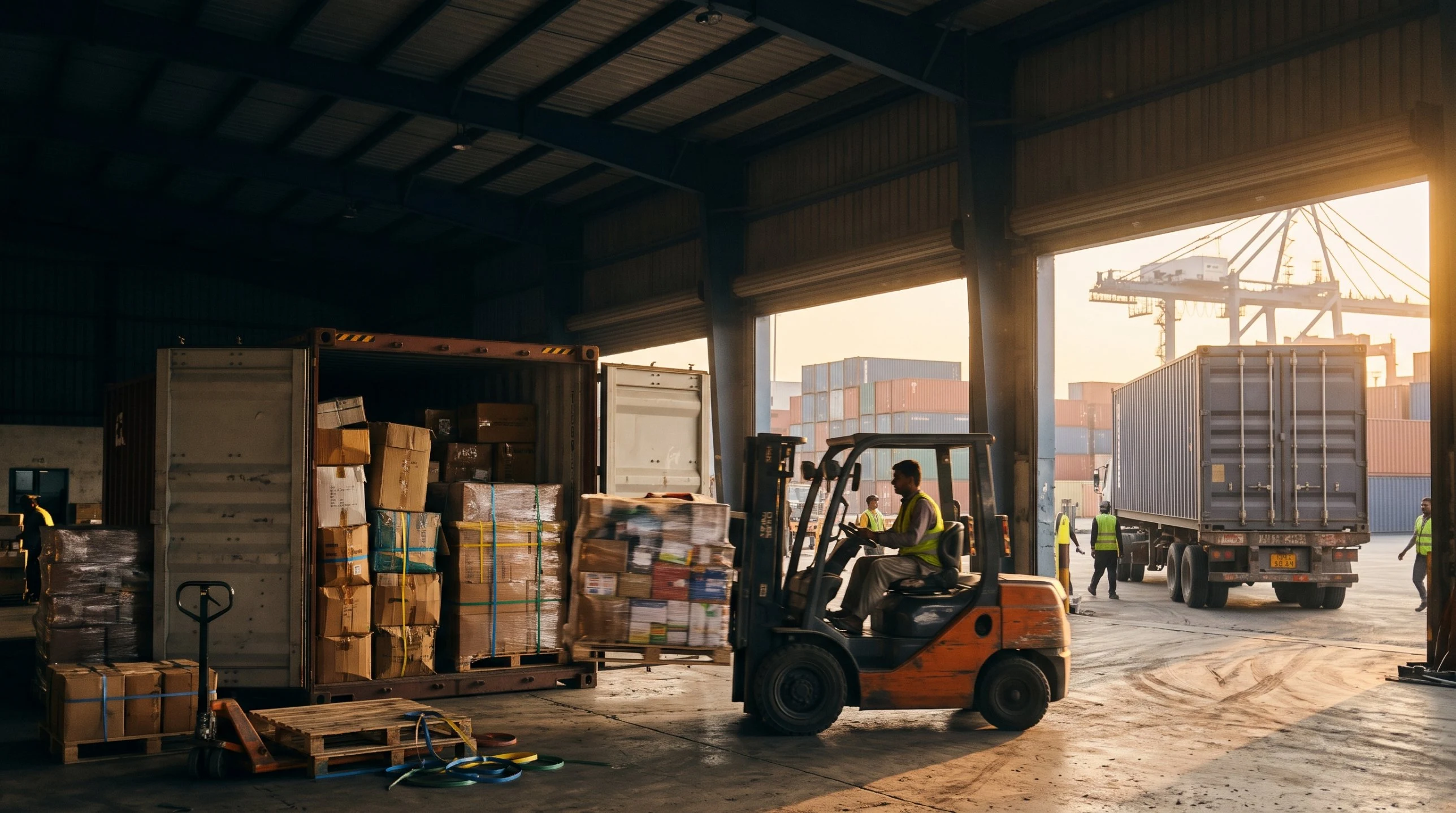
Illustrative AI-generated image. It does not depict a specific terminal, carrier or shipment.
FCL, LCL and air compared
| Factor | FCL (full container) | LCL (shared container) | Air freight |
|---|---|---|---|
| How you pay | Per container (20ft or 40ft), whatever you load | Per cubic metre (CBM) or per tonne, whichever is greater | Per kg of actual or volumetric weight, whichever is greater |
| Extra handling | Loaded once, unloaded once | Consolidated at an origin warehouse and split again at destination | Airport handling at both ends |
| Speed | Direct from port of loading once sailed | Often slower: waits for consolidation and destuffing | Fastest door-to-door |
| Customs risk | Only your goods in the box | Shares a box with other consignments; another shipper's problem can delay release | Separate air cargo clearance |
| Damage risk | Lower: fewer touches | Higher: more handling and mixed cargo | Low, but careful packing still matters |
| Best for | Large or regular volumes, fragile goods, tight control | Small orders, samples, first orders from a new supplier | Urgent, light, high-value or perishable cargo |
FCL: when a full container makes sense
Pros:
- You pay one price for the box, so every extra carton you load lowers the cost per unit.
- Your cargo is sealed at the supplier or origin warehouse and stays sealed until it reaches Pakistan. That means less handling and less risk of damage or loss.
- Customs examination and release depend only on your own documents, which matters when you need predictable clearance through the Pakistan Single Window.
Cons:
- At 2026 rates, a half-empty container is expensive space.
- You are also responsible for returning the empty container on time. Late returns trigger detention charges from the shipping line, and slow clearance at the port can add demurrage.
LCL: when sharing a container saves money
Pros:
- You pay only for the space you use, usually per CBM or per tonne, whichever is greater.
- For small first orders, samples or mixed purchases from several Chinese suppliers, LCL keeps cash free for stock rather than freight.
- A forwarder can consolidate goods from different suppliers into one shipment, so you don't pay for several part-empty boxes.
Cons:
- Local charges: the per-CBM ocean rate is only part of the cost. LCL also carries warehouse charges at both ends and destination delivery-order fees, which can add up quickly on small shipments.
- Delays from other shippers: if one consignment in the shared box is held for examination, everyone's release can be delayed. Check how the consolidator handles this at Karachi before booking.
Air freight: when speed is worth the premium
Air is the right answer when goods are urgent, light for their value, or time-sensitive. Examples are spare parts for a stopped machine, electronics samples or fashion stock for a sales window. The cost per kg is far higher than sea freight, and volumetric weight rules mean bulky, light cartons are charged as if they were heavier. Our air freight team can compare air with a sea-air or express option for small, urgent parcels.
How to work out your FCL vs LCL break-even
Don't rely on a fixed rule like "above 15 CBM, take FCL." Use your own current quotes:
- Get an all-in FCL quote: ocean freight, surcharges, origin and destination charges for the container.
- Get an all-in LCL quote per CBM, including consolidation, destination warehouse, delivery order and other local charges.
- Divide the FCL total by the LCL all-in rate per CBM. The answer is your break-even volume.
Illustrative example only, not a market rate: if a 20ft FCL quote came to US$4,400 all-in, and an LCL quote came to US$200 per CBM all-in, the break-even would be 4,400 ÷ 200 = 22 CBM. Above roughly 22 CBM, FCL would be cheaper, before you even count the lower handling risk. Below it, LCL would usually win on price. A 20ft container typically holds around 25–28 CBM of cargo in practice, depending on carton sizes and how they stack.
Re-run this sum whenever rates move. With China–Pakistan box rates reported at roughly double their earlier level, a shipment that justified FCL last year may now be cheaper as LCL, and the reverse can happen when rates fall.
Frequently asked questions
Does LCL take longer to clear customs in Karachi?
It can. LCL cargo is destuffed at a container freight station before each consignment is cleared separately. If another consignment in the same box is examined or has document problems, release can be delayed. Accurate documents, a correct PCT code and early filing reduce the risk. Our clearing and forwarding team can check these before the vessel arrives.
Can I combine goods from several Chinese suppliers into one container?
Yes. A forwarder can collect goods from different suppliers at an origin warehouse and load them into one FCL. You then pay for one container instead of several LCL shipments, which is often the cheapest option once total volume passes your break-even. Make sure each supplier's commercial invoice and packing list are consistent, since customs assesses the whole shipment.
Conclusion
Higher China–Pakistan freight rates don't change what FCL, LCL and air are good at, but they do change where the cost line sits. Compare all-in quotes, calculate your break-even volume, and weigh handling and customs risk alongside price. For the policy background on this trade lane, see our earlier look at China to Pakistan shipping trends. Our sea freight team can quote both FCL and LCL from major Chinese ports to Karachi and Port Qasim.
Sources and reporting notes
- Arab News: Pakistan export orders at risk as Middle East shipping disruption raises costs (October 2, 2026): China-to-Pakistan freight of $2,000–2,400 rising to $4,000–4,500 per container, as reported by industry representatives.
Information checked November 1, 2026. The break-even example uses illustrative numbers, not current market rates. Freight rates, surcharges and local charges change often; get current all-in quotes for your shipment. This article is general shipping information, not a rate quote.
Importing from China? Contact Falcon Global Logistics with your cargo volume, weight, origin city and target arrival date so FCL, LCL and air options can be compared side by side.