
If you import pen inks, nibs, ball-pen tips or plastic pen parts into Pakistan, the duty on your next shipment may be calculated on a higher customs value than your supplier's invoice shows. On Friday, October 23, 2026, the Directorate General of Customs Valuation in Karachi issued Valuation Ruling No. 2117 of 2026, raising the customs values of stationery raw materials imported from China and other origins, according to Business Recorder's October 25 report.
Quick answer: Ruling 2117 replaces a valuation ruling from 2017. It sets new assessment values for listed stationery inputs under Section 25A of the Customs Act, 1969. Importers who disagree can seek revision before the Director-General of Valuation under Section 25D, within thirty days of the determination. Before your next shipment, check your goods' classification and declared values against the new ruling.
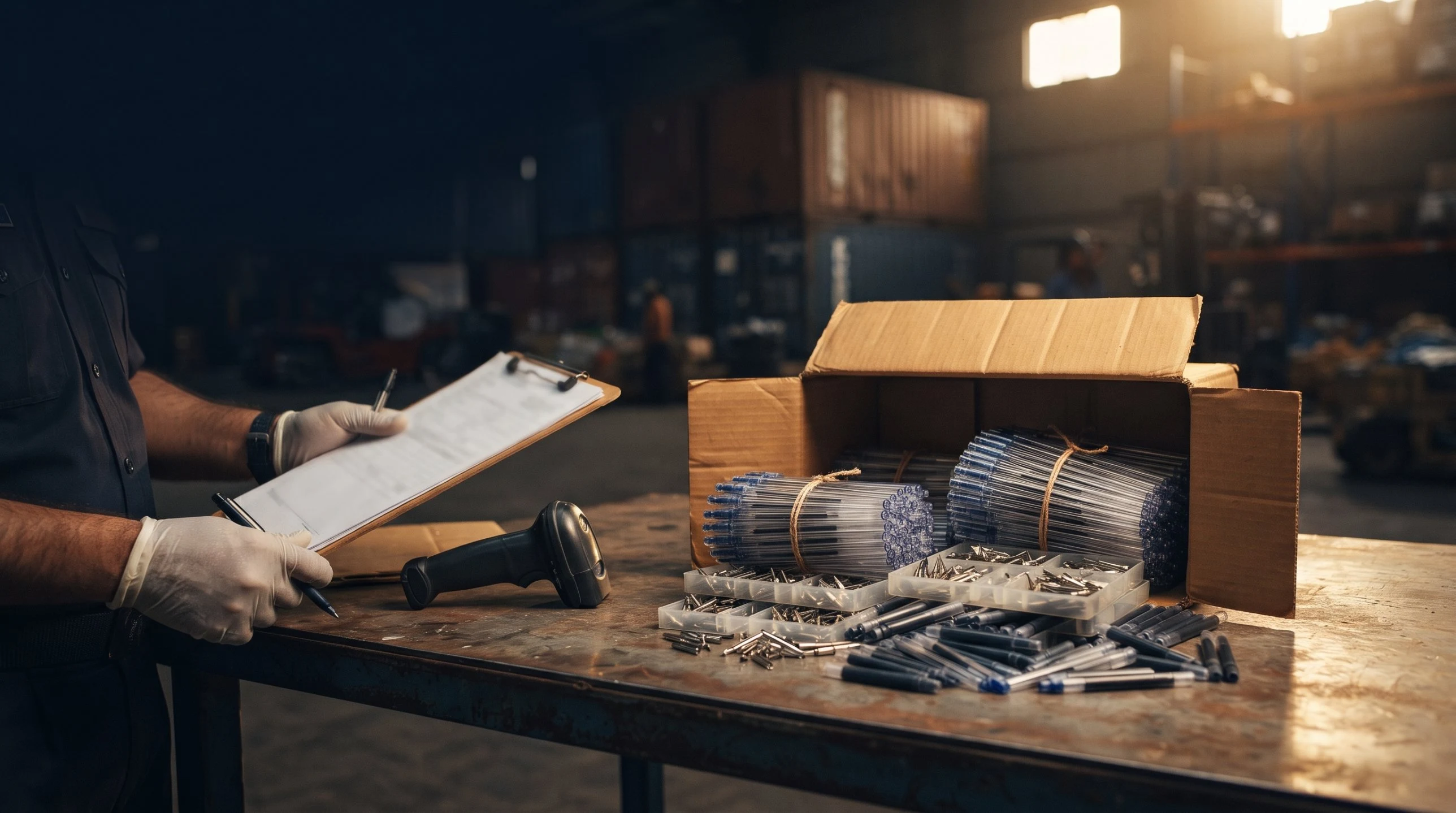
Illustrative AI-generated image. It does not depict a real customs examination or a specific consignment.
What is a customs valuation ruling, and why can it override my invoice?
Pakistan Customs normally starts from the transaction value: the price actually paid for the goods. Section 25A of the Customs Act lets the Collector of Customs or the Director of Customs Valuation determine the customs value of goods or categories of goods, using the methods in Section 25. FBR's own summary of the section says a value determined this way becomes "the applicable customs value for assessment" of those goods. It stays in force until it is revised or rescinded.
In practice, if your invoice shows a lower unit price than the ruling for the same description and origin, customs will usually assess duty and taxes on the ruling value. Customs duty, sales tax and withholding tax are all calculated on that base. So a higher ruling value raises your landed cost even if your supplier's price has not changed.
Which items does Ruling 2117 cover?
Business Recorder reported that the ruling covers ten raw material types used in stationery manufacturing. The items named in its report include:
- Water-based ink for fiber-tip and fine pens
- Ink for markers and ball pens
- Nibs, clips, and plastic and metal caps for fountain pens
- Ball-pen tips
- Ink cartridges for fountain pens
- Plastic parts for ball pens and gel pens
The report does not publish the old and new dollar values per item. That is why the full ruling text, with its PCT headings, descriptions and per-unit values, is the document to check before filing a goods declaration. Your customs agent can pull it from the Directorate's published rulings.
Why were the values raised now?
According to the report, the Directorate gave three reasons:
- An old ruling: the previous ruling for these goods dated from 2017 and needed a review.
- Under-invoicing: the review aimed to curb it.
- Higher costs: international prices have risen alongside higher freight, petroleum and energy costs linked to the US–Iran conflict.
The Directorate also said values were raised only for items with enough evidence of higher international prices. The determination followed notices and a hearing for importers, local manufacturers and other stakeholders.
The freight point matters beyond stationery. Longer routes and higher fuel costs have been pushing up landed costs across many import categories this year. Our recent look at Red Sea route changes covers the shipping side of that pressure.
Did stakeholders raise any problems with the ruling?
Yes. Local manufacturers raised two issues during the consultation:
- The tariff classification used for fountain-pen cartridge ink was incorrect and should be corrected in the new ruling.
- Plastic parts for ball pens and gel pens had never been covered by an earlier ruling, and they asked for them to be included.
Both points show why classification and valuation have to be checked together. A product declared under the wrong PCT heading can face a different duty rate and a different ruling value. That can lead to an assessment dispute or a penalty, and our article on customs penalty automation explains how those are increasingly flagged by the system.
Can an importer challenge a valuation ruling?
Yes. Under Section 25D of the Customs Act, a person who disagrees with a customs value determined under Section 25A can file a revision petition before the Director-General of Valuation within thirty days from the date of the determination. If you plan to challenge Ruling 2117, the clock is already running from late October.
A revision petition is far stronger with evidence. Useful evidence includes:
- Contemporaneous invoices from several suppliers
- Proof of payment through banking channels
- Supplier price lists
- Technical specifications showing your goods differ from the higher-value items described in the ruling
A general complaint that the new value is "too high" is unlikely to succeed. For a specific case, take advice from a customs lawyer or a licensed customs agent.
What should stationery importers do before the next shipment?
- Get the ruling text. Compare each line item on your purchase order with the ruling's descriptions, PCT codes and values, item by item.
- Recalculate landed cost. Re-run duty and taxes on the ruling value wherever it is higher than your invoice price. Update your selling prices or supplier negotiations before the goods arrive, not after assessment.
- Check the PCT code. Make sure the classification on your commercial invoice and packing list matches the goods. This matters most for cartridge inks and plastic pen parts.
- Ask about timing. For cargo already shipped or under clearance, ask your customs agent how the new ruling applies to goods declarations filed around its issue date.
- File complete documents. Clean, consistent documents on the Pakistan Single Window reduce the chance of a manual valuation query. Our PSW and digital clearance guide walks through the filing steps.
The bottom line
Valuation Ruling 2117 does not change the duty rate on stationery inputs. It changes the value the rate is applied to, and that can be just as costly. If pen inks, nibs, tips, cartridges or plastic pen parts are on your import list, review the ruling now. Recalculate your costs, and decide within the thirty-day window whether a revision petition is worth filing. For importers moving these goods in containers from China, our sea freight and import-export teams can help plan the shipment. Our clearing and forwarding team can check classification and valuation before you file.
Sources and reporting notes
- Business Recorder: Customs values of imported stationery raw materials increased (October 25, 2026): ruling number, items covered, reasons given and stakeholder objections.
- FBR: Director General of Customs Valuation, Section 25 of the Customs Act 1969: summary of Sections 25A and 25D.
Information checked October 28, 2026. The full ruling text, including per-item values, should be read directly before you file a goods declaration. This article is general information, not legal advice or a customs ruling.
Importing stationery components into Karachi? Contact Falcon Global Logistics with your product list and PCT codes so the applicable values can be checked before shipment.