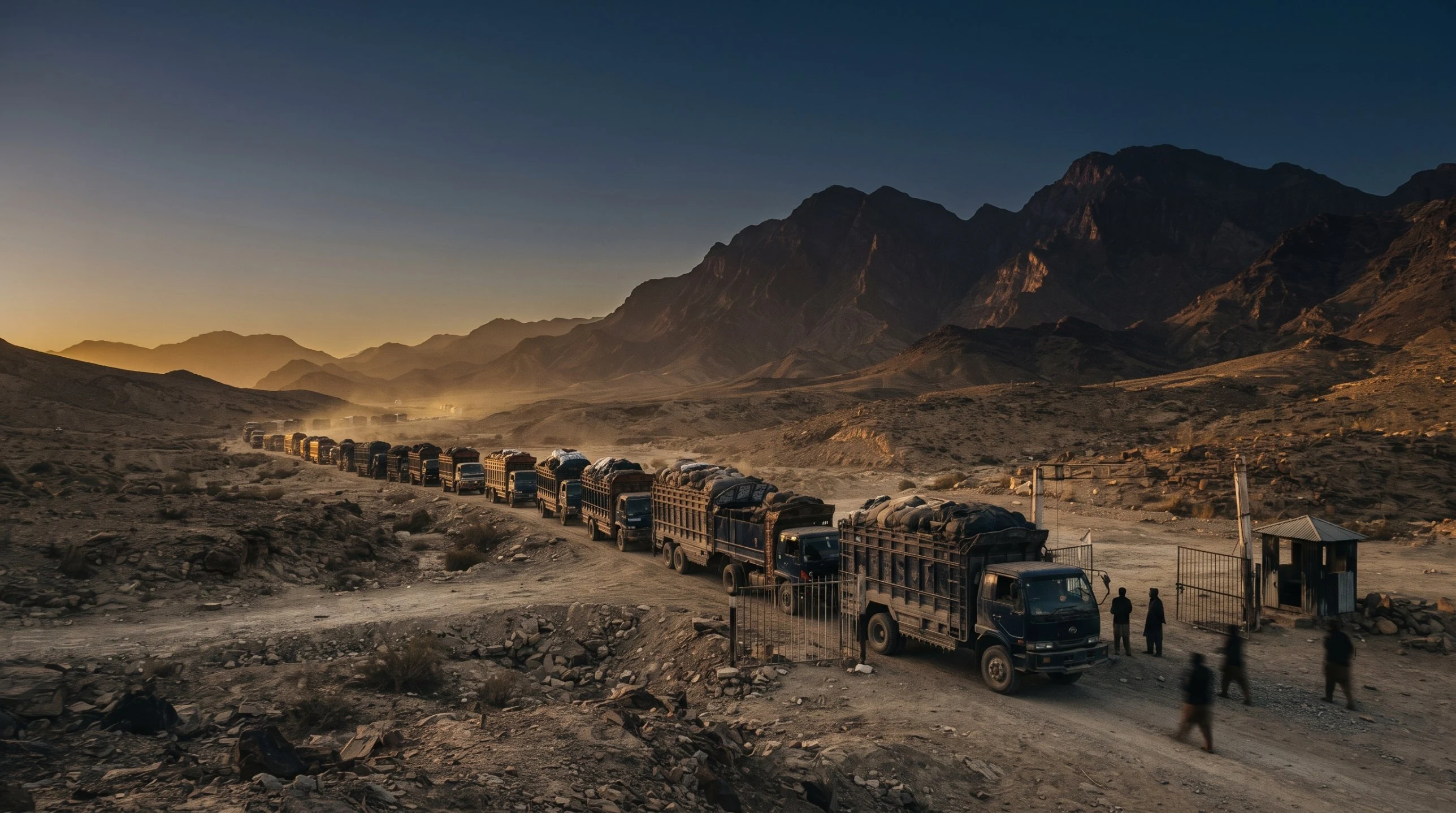
Pakistan's Ministry of Commerce has suspended trade at the Taftan and Gabd-Rimdan border crossings with Iran, withdrawing — with immediate effect — the October 3 order that had allowed trade through both routes. The memo was issued Friday, October 16, and reported October 18-19 by multiple outlets. Officials on both sides are calling it temporary, but neither has given a reopening date, and goods vehicles are currently stranded on both sides of the border. Here's what's actually known, broken down by the questions that matter if you have cargo, sourcing, or transit routing tied to these crossings.
Which Crossings Are Closed, and Since When?
Two crossings in Balochistan: Taftan, on the main Quetta-Zahedan road, and Gabd-Rimdan, further south near Gwadar. Both were suspended by the same Commerce Ministry memorandum issued Friday, October 16, which withdrew an October 3 order that had opened trade through them. Balochistan government adviser Shahid Rind and Iran's Foreign Ministry spokesperson Esmail Baqaei have both described the closure as temporary — Baqaei cited "technical issues" and said both countries are consulting to restore normal operations — but as of this writing, neither side has announced a firm reopening date. Passenger movement at Gabd-Rimdan has reportedly continued even as commercial cargo operations stopped.
What Goods and Trade Volume Does This Affect?
The goods named in current reporting are liquefied petroleum gas (LPG), rice, and fresh fruit — with more than 4,000 tonnes of LPG reportedly imported daily through Gabd-Rimdan alone, and Pakistani rice exports via that same crossing having grown in recent months. Separately, an April 25 Commerce Ministry order had designated six routes ending at Gabd and Taftan for trucking third-country goods into Iran, meaning some of the stranded cargo may be transshipment traffic rather than direct Pakistan-Iran trade. Estimates of stranded vehicles vary by source — from "hundreds" to roughly 2,000 according to the Quetta Chamber of Commerce and Industry, which also told its members to stop placing new import and export orders with Iran for now. On trade value, official bilateral trade ran around $2.8 billion in 2023-24, including $684 million in Pakistani exports, per the Federation of Pakistan Chambers of Commerce and Industry — and the two countries had agreed in August to a longer-term target of raising that to $10 billion.
| Metric | Figure |
|---|---|
| Crossings Suspended | Taftan & Gabd-Rimdan (Balochistan) |
| LPG Volume (Gabd-Rimdan, daily) | 4,000+ tonnes |
| Stranded Vehicles (estimates) | Hundreds to ~2,000 |
| Annual Bilateral Trade (2023-24) | ~$2.8 billion |
| Pakistani Exports to Iran (2023-24) | ~$684 million |
| August 2026 Target | $10 billion (longer-term) |
How Long Will the Suspension Last?
There is no confirmed timeline from either government as of this writing. Both sides' public statements lean toward a short-term closure — Rind said the border is "likely to reopen soon," and Baqaei framed it as a technical, consultative process rather than an indefinite shutdown — but neither has committed to a date, and the previous October 3 order that briefly reopened these routes shows that the situation has already reversed once this month. Treat any specific reopening date you hear secondhand as unconfirmed until it comes from an official source.
What Should You Do If You Have Cargo on These Routes?
- Hold new bookings through Taftan or Gabd-Rimdan for now, in line with the Quetta Chamber of Commerce's advisory, rather than committing new cargo to routes with no confirmed reopening date.
- Check the status of cargo already in transit with your forwarder directly — vehicles already stranded at the border need case-by-case handling, not a general assumption that they'll clear once the border reopens.
- If your cargo is LPG, rice, or perishable fruit sourced via these routes, start identifying alternate suppliers or sea freight options now rather than waiting, since perishable and time-sensitive goods are the most exposed to an extended closure.
- If you're moving third-country goods under the April transshipment order, confirm with your forwarder whether alternate designated routes remain open, since the suspension applies specifically to Taftan and Gabd-Rimdan.
Our clearing and forwarding team can help assess whether ocean freight routing is a viable near-term alternative for cargo that would otherwise move through these crossings.
Does This Affect Other Land Transit Routes, Like Afghanistan?
Not directly — the current suspension is specific to the Iran border. It's a separate situation from the one we covered in our look at Pakistan-Afghanistan transit trade, where multiple crossings have also seen disruption this year for different reasons. Taken together, though, the pattern is worth noting for any business relying heavily on Pakistan's western land borders: redundancy in your routing and supplier base is worth building in now, not after the next disruption.
Conclusion
This is an active, fast-moving situation with real trade consequences — thousands of tonnes of LPG, rice, and fruit moving through these crossings daily, and vehicles currently stranded on both sides. Both governments are framing it as temporary, but "temporary" has already reversed once this month, so the practical move is to treat it as open-ended until an official reopening is confirmed, and to have a routing alternative ready rather than waiting it out.
At Falcon Global Logistics, we're tracking developments at both crossings and can help assess alternate routing for affected cargo. Contact us today if your shipments are affected.